

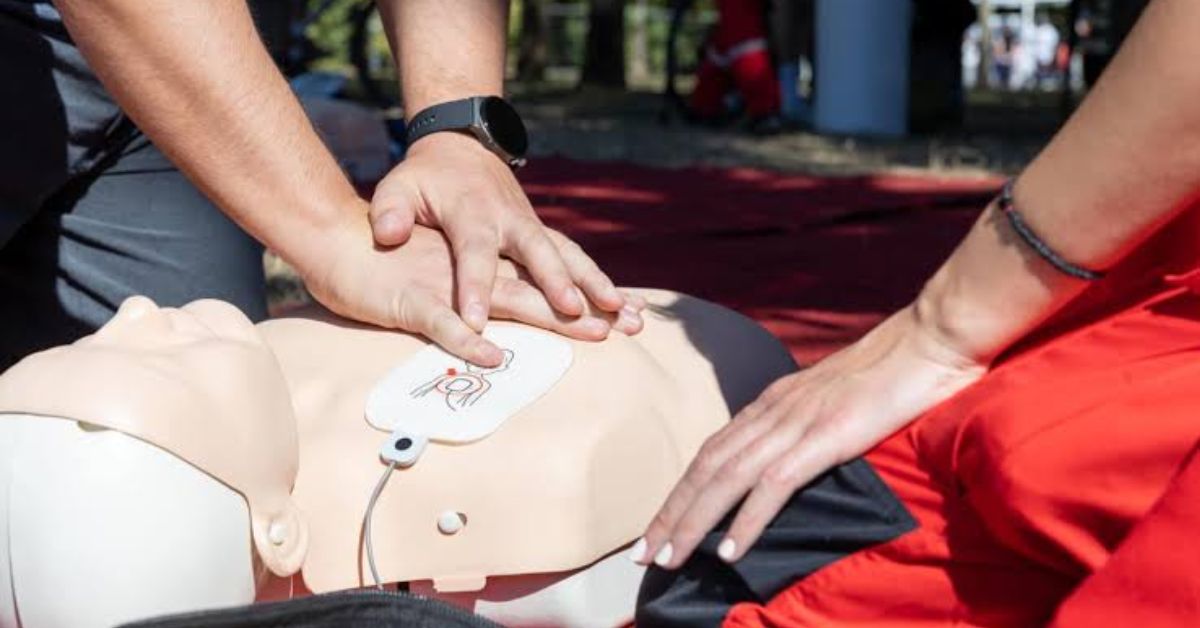
Should you get a home AED? For some households, having an automated external defibrillator (AED) available may provide an additional layer of preparedness for sudden cardiac arrest. A portable AED is designed to analyze a person’s heart rhythm and, when appropriate, deliver an electrical shock that can help restore a potentially life-threatening rhythm.
Sudden cardiac arrest is a medical emergency in which the heart suddenly stops pumping effectively. Immediate action matters. The American Heart Association recommends calling emergency medical services, starting CPR, and using an AED as soon as one is available when cardiac arrest is suspected.
However, buying an AED is not the right choice for every household. Cost, storage, maintenance, training, access to emergency services, and the health circumstances of people in the home should all be considered.
Understanding how home AEDs work, their potential benefits, limitations, and maintenance requirements can help you have a more informed conversation with a healthcare professional before making a purchase.
In This Article
What Is a Home AED?
An automated external defibrillator is a portable medical device designed to analyze a person’s heart rhythm during suspected cardiac arrest. If the device identifies a rhythm for which defibrillation is appropriate, it provides instructions for delivering a shock.
AEDs are designed for use by members of the public as well as trained responders. Modern devices provide voice and visual prompts that guide the user through the basic steps.
How Does an AED Work?
An AED generally uses adhesive electrode pads placed on the person’s bare chest. The device analyzes the heart’s electrical rhythm and determines whether a shock is appropriate.
Depending on the model, the AED may instruct the rescuer to press a button to deliver the shock or may deliver the shock automatically after providing appropriate warnings.
The device does not simply shock every person who collapses. It analyzes the heart rhythm and provides a shock only when the detected rhythm meets the device’s criteria for defibrillation.
Is an AED the Same as a Heart Monitor?
No. An AED is specifically designed for emergency treatment of certain cardiac arrest rhythms.
It should not be considered a general-purpose heart-monitoring device or a replacement for routine medical care. An AED is intended for emergency situations involving suspected cardiac arrest.
Why Would Someone Consider a Home AED?
AEDs are commonly found in public places such as schools, airports, offices, gyms, shopping centers, and other facilities. Having one at home can potentially reduce the time between cardiac arrest and access to a defibrillator if an emergency occurs inside the home.
The FDA notes that some people with underlying cardiac conditions may have a higher risk of sudden cardiac arrest and recommends discussing whether a home AED is appropriate with a healthcare professional.
Time Matters During Cardiac Arrest
Cardiac arrest is extremely time-sensitive. CPR helps maintain blood flow while an AED can potentially treat a shockable rhythm.
The American Heart Association states that immediate CPR can double or triple the chance of survival from out-of-hospital cardiac arrest, while rapid AED use can improve the chance of survival in appropriate cases.
A home AED therefore has one primary potential advantage: availability when every minute matters.
Portable AED Machine Benefits
A portable AED can offer several practical benefits for households that decide an AED is appropriate.
Quick Access During an Emergency
One of the biggest potential benefits of a home AED is having the device nearby.
If a cardiac arrest happens at home, family members do not have to spend additional time searching for a public AED. The device can be stored in a known, accessible location.
This does not eliminate the need to call emergency services. Instead, the AED becomes one part of the emergency response while professional medical help is on the way.
Easy-to-Follow Instructions
Modern public-access AEDs are designed to guide users through the process.
Voice prompts, lights, diagrams, and written instructions can help a person understand what to do during an extremely stressful emergency.
Training is still strongly recommended, but the device’s prompts are designed to help a user take action even when they are not a medical professional.
Portable Design
AEDs are generally lightweight enough to be transported when necessary.
A portable design can be useful in homes where family members travel frequently, participate in activities away from home, or spend time in locations where access to an AED may be limited.
However, an AED should be kept readily accessible rather than stored somewhere difficult to reach.
Useful for Certain Higher-Risk Households
Some households may have circumstances that make access to an AED particularly worth discussing with a healthcare professional.
For example, a person with certain cardiac conditions or a history that places them at increased risk may discuss emergency preparedness with their clinician.
A healthcare professional can consider the individual’s medical history and circumstances rather than assuming that every household needs the same equipment.
Provides an Additional Emergency Preparedness Tool
A home AED can be part of a broader emergency preparedness plan.
That plan may include CPR training, emergency contact information, knowledge of the local emergency number, first-aid supplies, and a clearly communicated plan for family members.
The AED should be viewed as one component of that plan rather than a standalone solution.
Home AED vs. Public AED
A common question is whether buying a home AED is worthwhile when public AEDs may already be available.
Public AEDs
Public AED programs place devices in locations where large numbers of people gather. They can be particularly valuable because sudden cardiac arrest can happen in many different settings.
Public AED availability also means that people do not necessarily need to own an AED themselves.
Home AED
A home AED provides immediate access within the household.
Its main advantage is convenience and proximity. Instead of depending on the location of the nearest public AED, a household can have a device ready.
However, the value of a home AED depends on factors such as the likelihood of an event, the time required for emergency responders to arrive, the availability of public AEDs nearby, and whether household members know how to respond.
CPR and AEDs Work Together
An AED should not replace CPR.
If an adult is unresponsive and not breathing normally or is only gasping, the American Heart Association recommends calling emergency services, starting CPR, and getting an AED as soon as possible.
Why CPR Is Important
CPR helps circulate blood to the brain and other vital organs while a person is in cardiac arrest.
Chest compressions should begin promptly when cardiac arrest is suspected. An AED can then analyze the heart rhythm and provide a shock when appropriate.
The Emergency Response Sequence
A basic response involves:
Calling the local emergency number.
Starting CPR when cardiac arrest is suspected.
Getting an AED if one is available.
Turning on the AED and following its prompts.
Continuing CPR as instructed until emergency professionals take over or the person shows signs of recovery.
Always follow the instructions of local emergency services and the AED itself.
Who Should Consider a Home AED?
There is no universal rule that every family should purchase an AED.
The decision may be worth discussing with a healthcare professional when someone in the household has circumstances associated with increased risk of sudden cardiac arrest.
People With Certain Cardiac Risk Factors
Some individuals have medical histories or heart conditions that may increase their risk of life-threatening arrhythmias.
A physician or qualified healthcare professional can explain the specific risk associated with an individual’s condition and whether additional emergency preparedness is appropriate.
Households Far From Emergency Services
Geographic location may also be relevant.
A household located a considerable distance from emergency medical services may consider emergency preparedness differently from a household located close to a hospital or emergency response station.
This does not mean an AED guarantees a better outcome. It simply means that immediate access to emergency equipment may be an important consideration.
Families With Appropriate Training
A home AED is more useful when household members know where it is stored and understand how to respond during a cardiac emergency.
CPR and AED training can help family members feel more prepared to act.
How to Choose a Portable AED
If you decide to explore purchasing a home AED, compare devices carefully rather than selecting one based only on price.
Look for an Approved Device
Regulatory requirements vary by country. In the United States, the FDA recommends ensuring that an AED and its necessary accessories are FDA-approved.
If you live outside the United States, check the applicable medical-device regulatory authority and local requirements.
Consider Ease of Use
Look for clear voice instructions, visual prompts, easy-to-understand diagrams, and a straightforward interface.
During a cardiac emergency, a complicated device can increase confusion.
Check Battery Requirements
AED batteries have a limited service life and need to be replaced according to the manufacturer’s recommendations.
Before purchasing, understand the expected battery lifespan, replacement process, and ongoing costs.
Check Electrode Pad Requirements
AED pads also have expiration dates or replacement intervals.
Some models require different pads for adults and children, while others may have pediatric options. Follow the manufacturer’s instructions for your specific device.
Consider Warranty and Support
Review the manufacturer’s warranty, customer support, replacement-parts availability, and maintenance requirements.
A less expensive device may not necessarily be the better value if replacement supplies are difficult to obtain.
Where Should You Store a Home AED?
An AED should be stored somewhere accessible, clearly identified, and known to everyone who may need to use it.
Keep It Easy to Reach
Avoid placing the device in a locked cabinet or an inaccessible storage area unless appropriate emergency access is available.
Family members should know exactly where the AED is located.
Protect It From Extreme Conditions
Follow the manufacturer’s storage instructions regarding temperature, moisture, and environmental conditions.
An AED is an electronic medical device, so proper storage helps ensure that it remains ready for use.
Check the Device Regularly
Do not simply buy an AED and forget about it.
Regularly check its status indicators, battery, electrode pads, accessories, and expiration dates according to the manufacturer’s instructions.
Home AED Maintenance
Maintaining an AED is just as important as purchasing one.
Check the Battery
Many AEDs have status indicators that show whether the device is ready for use.
Check the indicator according to the manufacturer’s instructions and replace the battery when required.
Replace Expired Pads
Electrode pads have limited shelf lives.
Keep track of expiration dates and replace pads before they expire. If pads are used, follow the manufacturer’s replacement requirements.
Keep Supplies Together
Depending on the AED and local recommendations, useful accessories may include replacement pads, batteries, scissors for removing clothing, gloves, and other emergency supplies.
Always follow the manufacturer’s guidance about compatible accessories.
Should You Buy a Used AED?
Buying a used AED can create additional questions about device history, maintenance, battery condition, electrode pads, software, regulatory status, and availability of compatible accessories.
The FDA recommends obtaining AEDs and accessories from authorized retailers and checking that the device and accessories meet applicable approval requirements in the United States.
If considering a used device, carefully verify its regulatory status, service history, condition, and compatibility with currently available replacement components.
Home AED Limitations
A home AED can be useful emergency equipment, but it has important limitations.
It Does Not Prevent Cardiac Arrest
An AED does not prevent a heart attack or cardiac arrest.
It is an emergency treatment device intended for certain dangerous heart rhythms during cardiac arrest.
It Does Not Replace Emergency Medical Care
Even if an AED is available, emergency services should be contacted immediately.
An AED does not provide the advanced medical assessment and treatment available from emergency professionals.
It Does Not Shock Every Cardiac Arrest
Not every cardiac arrest rhythm can be treated with defibrillation.
The AED analyzes the heart rhythm and determines whether a shock is appropriate. If it does not advise a shock, the rescuer should follow the device’s instructions and continue CPR as directed.
Home AED Safety Considerations
AEDs are designed with safety features that analyze the heart rhythm before recommending a shock.
When using one, it is important to follow the device’s instructions carefully.
Do Not Touch the Person During Rhythm Analysis
When the AED is analyzing the heart rhythm, rescuers should ensure that nobody is touching the patient unless instructed otherwise.
If a shock is advised, everyone must stay clear of the person when the device instructs the rescuer to deliver it.
Follow the AED Prompts
Do not attempt to improvise the process.
Turn the device on, listen to the instructions, attach the pads as shown, and follow each prompt.
The American Heart Association emphasizes that AEDs are designed for public use and provide instructions to guide rescuers.
Why CPR and AED Training Matters
Although AEDs are designed to be usable by the general public, training can improve confidence and preparedness.
A CPR and AED course can teach you how to recognize cardiac arrest, begin CPR, use an AED, and coordinate with emergency services.
The FDA also recommends AED training in connection with CPR training.
Train Other Household Members
If you purchase an AED, do not assume that only one person needs to understand it.
Adults and other capable household members should know where the device is located and understand the basics of emergency response.
Children who are old enough to understand emergency instructions can also be taught to call for help and alert an adult, while formal CPR/AED training should be age-appropriate.
Is It Worth Having an AED at Home?
A home AED may be worth considering for households where someone has particular cardiac risk factors or where access to emergency medical services may take longer. However, an AED is not necessary for every household. The decision should consider individual health circumstances, accessibility, cost, maintenance, and training. Discussing the decision with a healthcare professional can help determine whether a home AED is appropriate.
Can an Untrained Person Use an AED?
Yes. AEDs are designed to guide people through the basic steps using voice prompts, visual instructions, or both. The device analyzes the person’s heart rhythm and determines whether a shock is appropriate. Formal CPR and AED training is still strongly recommended because training can improve confidence and help people respond quickly during an emergency.
Does an AED Replace CPR?
No. An AED does not replace CPR. When cardiac arrest is suspected, emergency services should be contacted immediately, CPR should begin, and an AED should be used as soon as one becomes available. CPR helps maintain circulation while the AED evaluates the heart rhythm and provides a shock when appropriate.
Can an AED Restart Any Stopped Heart?
No. An AED does not restart every heart that has stopped. It analyzes the heart’s electrical rhythm and provides a shock only when a shockable rhythm is detected. Some cardiac arrest rhythms do not respond to defibrillation, so CPR and professional emergency care remain essential.
How Often Should a Home AED Be Checked?
Follow the manufacturer’s maintenance instructions carefully. Regular checks may include the device’s readiness indicator, battery condition, electrode pad expiration dates, and other accessories. Replace expired or used components according to the manufacturer’s recommendations.
Where Should a Home AED Be Kept?
Store the AED in an easily accessible location that household members know about. Avoid placing it somewhere difficult to reach during an emergency. Follow the manufacturer’s recommendations for temperature, moisture, and other storage conditions, and make sure everyone who may respond knows where the device is located.
Must Read:
- 10 Tips for Nursing Blog Success
- 10+ of the Least Stressful Nursing Jobs You Can Get
- Good Minors for Nursing Majors – Expand Your Knowledge and Skills
Final Thoughts:
A home AED can provide an additional emergency preparedness option for households, particularly when there are individual medical considerations or concerns about access to emergency equipment. Portable AED machines are designed to analyze heart rhythms, provide step-by-step instructions, and deliver a shock when appropriate.
However, owning an AED does not replace emergency medical services, CPR, or professional medical care. The most important response to suspected cardiac arrest is to act quickly: contact emergency services, begin CPR, and use an AED as soon as one is available.
If you are considering purchasing a home AED, discuss the decision with a qualified healthcare professional and research approved devices available in your region. Pay attention to device approval, battery and electrode replacement, storage conditions, manufacturer support, and training.