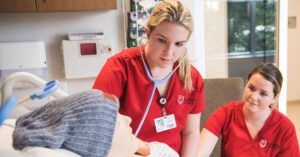


Becoming a postpartum nurse can be a rewarding career for people who want to support mothers and newborns during the first days after childbirth. Postpartum nurses play an important role in maternal and infant care by monitoring recovery, assisting with newborn care, educating families, and helping parents feel more confident as they begin life with a new baby.
If you are interested in nursing, maternal health, and newborn care, understanding how to become a postpartum nurse is an important first step. This career typically requires nursing education, professional licensure, clinical experience, and specialized knowledge of postpartum recovery and newborn health.
The exact requirements depend on the country, state, or region where you plan to work. In the United States, postpartum nurses commonly qualify as registered nurses (RNs), although some employers may have additional requirements for maternity or mother-baby units.
This guide explains the education requirements, nursing qualifications, essential skills, certifications, job responsibilities, salary considerations, and steps involved in pursuing a postpartum nursing career.
In This Article
What Is a Postpartum Nurse?
A postpartum nurse is a registered nurse who cares for mothers and newborns after childbirth. These nurses commonly work in hospital maternity units, mother-baby units, postpartum recovery departments, and other healthcare settings that provide care following delivery.
The postpartum period begins immediately after childbirth and includes the mother’s physical recovery and adjustment to caring for a newborn. Nurses help monitor the mother’s condition, assess the baby’s health, provide education, and identify complications that may require medical attention.
Postpartum nurses often work closely with obstetricians, pediatricians, lactation consultants, midwives, and other healthcare professionals.
What Does a Postpartum Nurse Do?
The responsibilities of a postpartum nurse can vary by healthcare facility, but common duties include:
- Monitoring the mother’s vital signs and physical recovery.
- Assessing postpartum bleeding and uterine recovery.
- Checking the newborn’s temperature, feeding, and general condition.
- Helping mothers learn breastfeeding and newborn-feeding techniques.
- Teaching parents about diaper changes, bathing, and safe sleep.
- Administering prescribed medications and treatments.
- Recognizing warning signs of postpartum complications.
- Supporting families as they prepare to leave the hospital.
- Documenting patient assessments and communicating with the healthcare team.
Postpartum nurses also provide emotional support. Childbirth and the early days of parenthood can be physically and emotionally demanding, so nurses help families understand what to expect and when to seek further medical care.
How to Become a Postpartum Nurse
The process of becoming a postpartum nurse generally involves completing an approved nursing program, obtaining the required nursing license, gaining relevant clinical experience, and applying for postpartum nursing positions.
The following steps describe a common pathway in the United States. Requirements may differ in other countries.
Step 1: Complete Your High School Education
The first step is completing high school or an equivalent qualification. Students interested in nursing can benefit from studying biology, chemistry, mathematics, and other subjects related to health sciences.
Strong communication skills are also valuable because nurses must explain medical information clearly to patients and families.
If you are still in school, consider volunteering in suitable community health programs or exploring healthcare career resources to learn more about nursing responsibilities.
Step 2: Choose an Accredited Nursing Program
To become a registered nurse, you generally need to complete an approved nursing education program. In the United States, two common educational routes are an Associate Degree in Nursing (ADN) and a Bachelor of Science in Nursing (BSN).
Associate Degree in Nursing
An ADN program commonly takes around two years of full-time study after prerequisite requirements, although the overall timeline varies. It includes classroom instruction, laboratory work, and supervised clinical experience.
This route may provide a relatively direct pathway toward RN licensure, depending on state requirements and the program.
Bachelor of Science in Nursing
A BSN program commonly takes about four years for students entering directly from high school. It combines nursing coursework and clinical education with broader study in areas such as leadership, research, and public health.
Some healthcare employers prefer or require a BSN, so this degree may provide additional flexibility for future career development.
Important: Choose a program approved by the relevant nursing education authority and recognized by your state board of nursing. Accreditation and approval requirements differ, so verify them before enrolling.
Step 3: Complete Clinical Nursing Training
Nursing students participate in supervised clinical placements as part of their education. These placements help them develop practical skills and learn how to care for patients in real healthcare environments.
If available, seek clinical experiences related to:
- Maternal and newborn health.
- Labor and delivery.
- Postpartum recovery.
- Pediatric nursing.
- Family-centered patient education.
- Breastfeeding support and newborn feeding.
You may not be able to choose every placement, but experience in maternal-child health can help you prepare for postpartum nursing positions.
Clinical training also teaches essential professional skills, including patient assessment, documentation, infection prevention, medication safety, and communication with other healthcare professionals.
Step 4: Pass the Required Nursing Licensure Examination
In the United States, graduates seeking initial RN licensure generally need to pass the National Council Licensure Examination for Registered Nurses, known as the NCLEX-RN, and satisfy other state board requirements.
The examination assesses whether candidates have the knowledge and judgment needed for entry-level registered nursing practice.
Licensure requirements may include an approved education program, an application, background checks, and other state-specific steps.
If you plan to work outside the United States, the licensing process will be different. For example, nurses in other countries may need registration with a national or regional nursing council and may have additional examination or language requirements.
Step 5: Gain Relevant Nursing Experience
After obtaining your nursing license, you can begin applying for positions that provide experience in maternal and newborn care.
Some hospitals hire newly licensed nurses into postpartum or mother-baby units through graduate nurse residency programs. Other employers prefer candidates with previous experience in labor and delivery, postpartum care, pediatrics, or general medical-surgical nursing.
Relevant experience helps you become more confident in assessing patients, recognizing complications, educating parents, and responding to changes in a mother’s or newborn’s condition.
If a postpartum position is not immediately available, consider entry-level nursing roles that provide transferable clinical skills while you continue pursuing maternal-child health opportunities.
Step 6: Apply for Postpartum Nursing Jobs
Once you meet the employer’s education and licensing requirements, prepare a résumé highlighting relevant clinical placements, nursing skills, patient education experience, and certifications.
Search for job titles such as:
- Postpartum Registered Nurse.
- Mother-Baby Nurse.
- Maternal-Newborn Nurse.
- Couplets Care Nurse.
- Postnatal Nurse.
- Maternity Unit Registered Nurse.
The exact terminology varies by employer and country. Review each job description carefully to identify required experience, certifications, shift expectations, and unit-specific responsibilities.
Step 7: Complete Employer Training and Orientation
New postpartum nurses commonly receive unit orientation and supervised training. The length and structure depend on the hospital, the nurse’s experience, and the complexity of the role.
Orientation may cover newborn assessments, maternal recovery, feeding support, medication protocols, emergency procedures, documentation systems, and discharge education.
Ask questions, use available clinical resources, and follow the facility’s policies and scope-of-practice requirements. Postpartum nursing requires careful assessment and prompt escalation when a patient develops concerning symptoms.
Essential Skills for a Postpartum Nurse
Postpartum nurses need a combination of clinical knowledge, communication skills, emotional awareness, and attention to detail.
Maternal and Newborn Assessment
Nurses must learn to assess mothers recovering from childbirth and monitor newborns for signs that require further evaluation. This includes recognizing changes in vital signs, bleeding, pain, feeding, temperature, and overall condition.
Understanding when a finding is outside the expected recovery pattern is essential for patient safety.
Communication and Patient Education
Postpartum nurses explain recovery instructions, medication guidance, newborn care, and follow-up recommendations in language families can understand.
They should be comfortable answering questions, checking whether parents understand the information, and adapting their communication to different backgrounds and needs.
Emotional Support and Empathy
New parents may experience fatigue, anxiety, uncertainty, or emotional changes. Nurses should respond respectfully, listen without judgment, and provide appropriate support.
They must also recognize when emotional symptoms require assessment or referral to a mental health professional.
Organization and Attention to Detail
Postpartum units can involve multiple patients, medications, assessments, feeding schedules, and discharge plans. Strong organization helps nurses prioritize care and communicate important information during shift handovers.
Accurate documentation is also essential for continuity of care and patient safety.
Teamwork and Critical Thinking
Postpartum nurses work with physicians, lactation consultants, pediatric teams, and other professionals. They need to share relevant information, follow clinical protocols, and recognize when a patient needs urgent evaluation.
Critical thinking is especially important when a mother’s or newborn’s condition changes unexpectedly.
Certifications for Postpartum Nurses
Additional certifications may help nurses strengthen their knowledge and demonstrate relevant clinical competence. Certification requirements depend on the employer, professional organization, and nursing role.
Basic Life Support
Basic Life Support (BLS) training is commonly required for hospital nurses. It covers essential responses to life-threatening emergencies.
Neonatal Resuscitation Program
The Neonatal Resuscitation Program (NRP) provides training for healthcare professionals involved in newborn resuscitation. Whether it is required for a postpartum position depends on the facility and the nurse’s responsibilities.
Advanced Cardiac Life Support
Advanced Cardiovascular Life Support (ACLS) may be required or preferred for certain nursing roles, but it is not universally required for every postpartum nurse. Check the job description and employer policy.
Inpatient Obstetric Nursing Certification
Experienced nurses may consider the Inpatient Obstetric Nursing (RNC-OB) certification offered through the National Certification Corporation (NCC), subject to its current eligibility criteria.
This credential is focused on inpatient obstetric nursing rather than being a universal requirement for postpartum nurses. Review the certification organization’s current requirements before planning to pursue it.
Lactation Education
Training in breastfeeding and lactation support can be valuable for postpartum nurses. Some nurses pursue additional lactation education or professional credentials, depending on their career goals and eligibility.
A postpartum nurse does not automatically need to become an International Board Certified Lactation Consultant (IBCLC). This is a separate professional credential with its own education, clinical experience, and examination requirements.
How Much Does a Postpartum Nurse Make?
Postpartum nurse salaries vary by location, experience, education, employer, shift, and local demand for nurses. Compensation may also differ between hospitals, outpatient services, and other maternal-care settings.
In the United States, the U.S. Bureau of Labor Statistics reports registered nurse wage data, but it does not provide a single national salary figure specifically for postpartum nurses. General RN wage statistics can offer a reference point, while local job listings provide a more practical estimate for a specific position.
Factors That Affect Salary
Several factors may influence postpartum nurse earnings:
- Geographic location: Pay varies by state, city, and local cost of living.
- Experience: Experienced nurses may qualify for higher pay or specialized roles.
- Education: Some employers offer different opportunities or pay structures based on qualifications.
- Certifications: Relevant credentials may support career advancement, depending on employer policies.
- Work schedule: Night shifts, weekends, and overtime may affect total earnings.
- Employer type: Compensation varies among hospitals and other healthcare organizations.
When comparing job offers, consider benefits, paid leave, retirement contributions, health insurance, staffing levels, orientation, and professional development opportunities—not just base salary.
Where Do Postpartum Nurses Work?
Although many postpartum nurses work in hospitals, several healthcare environments may involve postpartum care.
Hospital Mother-Baby Units
Hospital mother-baby units are a common workplace for postpartum nurses. Nurses care for mothers recovering after delivery and their newborns, often keeping the parent and baby together when medically appropriate.
Maternity and Women’s Health Services
Some nurses work in maternity services or specialized women’s health settings that provide postpartum education, follow-up, and recovery support.
Community and Home-Based Care
Depending on the country and local healthcare system, nurses may provide postpartum visits or home-based maternal and newborn support. These roles may have different qualifications and responsibilities from inpatient hospital nursing.
Outpatient Clinics
Certain clinics offer postpartum follow-up and newborn assessments. Nurses in these settings may support patient education, screening, care coordination, and referrals.
Challenges of Being a Postpartum Nurse
Postpartum nursing can be rewarding, but it also involves demanding responsibilities.
Emotional and Physical Demands
Nurses may care for families experiencing difficult births, unexpected complications, feeding challenges, or emotional distress. Providing compassionate care while managing these situations can be demanding.
Shift Work
Hospital postpartum nurses may work long shifts, nights, weekends, or holidays. Shift schedules depend on the facility and may affect work-life balance.
Recognizing Complications
Although many mothers and newborns recover without major problems, serious complications can occur. Nurses must recognize warning signs and follow emergency protocols promptly.
For mothers, urgent concerns may include heavy bleeding, chest pain, difficulty breathing, severe headache, seizures, or symptoms suggesting infection. For newborns, concerning signs may include breathing difficulty, unusual lethargy, poor feeding, or abnormal temperature.
Postpartum nurses do not replace physicians or other clinicians. Their role includes monitoring, timely escalation, following protocols, and helping families access appropriate care.
Tips for Building a Successful Postpartum Nursing Career
If you want to become a postpartum nurse, consider these practical steps:
- Research nursing programs: Confirm that the program meets the requirements for licensure where you plan to work.
- Build clinical foundations: Focus on patient assessment, medication safety, communication, and documentation.
- Seek maternal-child experience: Pursue relevant clinical placements or entry-level opportunities when available.
- Maintain required credentials: Keep your nursing license and employer-required training current.
- Develop patient education skills: Practice explaining recovery and newborn care in clear, supportive language.
- Explore professional development: Consider relevant courses and certifications when eligible.
- Prepare for interviews: Be ready to discuss teamwork, clinical judgment, family-centered care, and how you would escalate concerning findings.
Career development continues after hiring. Experienced postpartum nurses may pursue roles in charge nursing, clinical education, lactation support, maternal-child health leadership, or related specialties, depending on qualifications and opportunities.
Must Read:
- Is TEMU Like Wish? A Nurse’s Guide to this Shopping Platform
- Networking for Nursing Students: Why It Matters and How to Start Early
- How to Become a PMHNP: Responsibilities, Skills, and Career Steps
FAQs:.
How Long Does It Take to Become a Postpartum Nurse?
In the United States, a common pathway includes approximately two years for an ADN or four years for a BSN, followed by licensure and job-specific orientation. Prerequisites, part-time study, licensing steps, and employer requirements can change the total timeline.
Do You Need to Be a Registered Nurse to Become a Postpartum Nurse?
Many hospital postpartum nurse positions require an RN license. Other maternal-care roles may have different requirements, but they are not necessarily equivalent to working as a registered postpartum nurse. Always check the job description and local regulations.
Is Postpartum Nursing the Same as Labor and Delivery Nursing?
No. Labor and delivery nurses primarily care for patients during labor, childbirth, and the immediate delivery process. Postpartum nurses focus on recovery after childbirth and newborn care. Some hospitals cross-train nurses to work in both areas.
Is a BSN Required for Postpartum Nursing?
Not everywhere. Some employers accept an ADN with RN licensure, while others prefer or require a BSN. Verify the requirements of hospitals in your intended location before choosing an education pathway.
Can New Graduate Nurses Work in Postpartum Units?
Yes, some hospitals hire new graduate nurses into postpartum units, often through structured residency or orientation programs. Other facilities prefer prior clinical experience. Requirements vary by employer.
Is Postpartum Nursing a Good Career?
Postpartum nursing may be a good fit for people interested in maternal and newborn health, patient education, teamwork, and family-centered care. However, the role also involves shift work, clinical responsibility, and emotionally challenging situations.
Final Thoughts:
Learning how to become a postpartum nurse starts with choosing an approved nursing education program, completing the required clinical training, obtaining the appropriate license, and developing skills in maternal and newborn care. Additional experience and relevant certifications may help you qualify for specialized roles and advance your career.
The most important steps are to understand the requirements where you intend to work, gain a strong foundation in nursing practice, and prepare to support mothers and newborns safely and compassionately.
If maternal health and newborn care interest you, postpartum nursing can offer a meaningful way to help families during an important transition. Research local education programs, licensing rules, and employer expectations to create a realistic pathway toward this career.