
The healthcare industry is experiencing a major transformation as digital technology, telemedicine, and virtual healthcare services continue to expand. One of the most common questions among healthcare professionals today is: Can nurses work fully remote in 2026?
The answer is yes, but it depends on the nursing specialty, experience level, and job responsibilities. While bedside nursing still requires direct patient interaction, many nursing roles can now be performed entirely from home. Telehealth services, remote patient monitoring, healthcare management, nursing informatics, and virtual care coordination have created new opportunities for nurses who want flexible remote careers.
In 2026, fully remote nursing is no longer a rare option. Healthcare organizations, insurance companies, telemedicine providers, and digital health startups are actively hiring nurses for virtual positions. These jobs allow nurses to provide patient care, education, and support without working in a traditional hospital setting.
This article explores whether nurses can work fully remote in 2026, the types of remote nursing jobs available, required skills, benefits, challenges, salary expectations, and the future of remote nursing careers.
In This Article
The Rise of Remote Nursing
Remote nursing has grown rapidly over the past decade due to advancements in healthcare technology. Telemedicine platforms, electronic health records, cloud-based healthcare systems, and digital communication tools have made it possible for nurses to provide care from virtually anywhere.
Healthcare providers are increasingly investing in remote healthcare solutions because they improve patient access, reduce costs, and enhance efficiency. Patients also appreciate the convenience of receiving healthcare support without visiting a clinic or hospital.
As a result, remote nursing has evolved from a niche career path into a mainstream healthcare profession.
What Does Fully Remote Nursing Mean?
Fully remote nursing refers to nursing positions that can be performed entirely from home or another remote location without regular in-person patient care.
Remote nurses typically use:
- Telehealth platforms
- Video conferencing tools
- Electronic health records
- Patient monitoring systems
- Healthcare communication software
Instead of working directly at a patient’s bedside, remote nurses communicate through digital channels and coordinate care virtually.
Can Nurses Really Work From Home Full-Time?
Yes, many nurses can work from home full-time in 2026. However, not all nursing specialties are suitable for remote work.
For example:
- Emergency room nurses must provide direct patient care.
- Surgical nurses work in operating rooms.
- Intensive care nurses often require bedside responsibilities.
On the other hand, several nursing roles have successfully transitioned into fully remote positions.
The growth of telemedicine has significantly increased the number of nursing jobs that can be performed remotely.
Telehealth Nurse
Telehealth nursing is one of the most popular and fastest-growing fully remote nursing careers in 2026. As healthcare organizations continue expanding virtual care services, telehealth nurses are becoming essential members of modern healthcare teams. These professionals provide patient care through phone calls, video consultations, mobile applications, and online healthcare platforms without needing to meet patients in person.
Responsibilities of a Telehealth Nurse
Telehealth nurses perform a variety of important tasks, including:
- Assessing patient symptoms and health concerns
- Providing healthcare advice and guidance
- Educating patients about medications and treatment plans
- Monitoring treatment progress and recovery
- Coordinating follow-up care and referrals
They use clinical knowledge and critical thinking skills to evaluate patient conditions and determine the most appropriate course of action.
Why Telehealth Nursing Is Growing
The demand for telehealth nurses continues to increase because patients want convenient access to healthcare services from home. Telehealth also helps healthcare providers reach patients in rural and underserved areas where medical services may be limited.
Benefits of Telehealth Nursing
Telehealth nursing offers several advantages, including flexible work schedules, remote work opportunities, reduced commuting, and improved work-life balance. Nurses can continue providing high-quality patient care while working in a comfortable home environment.mote nursing careers.
Nurse Case Manager
Nurse case managers play an important role in helping patients receive coordinated and effective healthcare services. This fully remote nursing position is especially valuable for patients with complex medical conditions who require ongoing treatment, multiple healthcare providers, and long-term care planning. Many insurance companies, healthcare organizations, and telehealth providers hire remote nurse case managers to improve patient outcomes and healthcare efficiency.
Responsibilities of a Nurse Case Manager
Remote nurse case managers are responsible for:
- Reviewing treatment plans and medical records
- Communicating with physicians, specialists, and healthcare providers
- Coordinating healthcare services and resources
- Monitoring patient progress and recovery
- Supporting patients throughout their healthcare journey
They ensure that patients receive appropriate care while helping healthcare teams work together effectively.
Importance of Future of Fully Remote Nursing
The future of fully remote nursing looks extremely promising as healthcare organizations continue investing in digital healthcare technologies, telemedicine platforms, and virtual patient care solutions. Remote nursing is expected to become an even more important part of modern healthcare, creating new opportunities for nurses around the world.
Increased Telemedicine Adoption
Healthcare providers continue expanding virtual care services to improve patient access and reduce healthcare costs. Telemedicine is becoming a standard part of healthcare delivery, allowing nurses to provide consultations, education, and support remotely. As patient demand for convenient healthcare grows, telehealth nursing opportunities are expected to increase significantly.
Growth of Artificial Intelligence
Artificial intelligence is transforming healthcare by helping nurses work more efficiently. AI-powered tools will support nurses by:
- Analyzing patient data
- Automating administrative tasks
- Improving care coordination
- Identifying potential health risks
These technologies can reduce workloads and allow nurses to focus more on patient care and communication.
Expansion of Remote Patient Monitoring
Wearable devices and connected healthcare systems are making it easier to monitor patient health from home. Remote patient monitoring programs will continue to expand, creating additional opportunities for nurses to track patient conditions, manage chronic diseases, and provide early intervention when necessary.
More Specialized Remote Roles
Healthcare innovation will continue generating new remote nursing specialties in areas such as telehealth, nursing informatics, virtual care management, digital health coaching, and remote patient monitoring. Nurses who develop technology skills and stay updated with healthcare trends will be well-positioned for these emerging opportunities.Management
Case management helps reduce healthcare complications, prevent unnecessary hospital visits, and improve treatment outcomes. Nurse case managers also help patients understand their care plans, medications, and available healthcare resources.
Career Opportunities
Many insurance companies, healthcare organizations, and managed care providers actively recruit nurse case managers for remote positions. These roles often offer flexible schedules, competitive salaries, and opportunities for professional growth.zations hire remote nurse case managers.
Utilization Review Nurse
Utilization review nurses analyze medical records and treatment requests.
Their duties include:
- Reviewing healthcare services
- Ensuring treatment necessity
- Evaluating insurance coverage requirements
- Supporting healthcare quality standards
This role is commonly offered as a fully remote position.
Remote Patient Monitoring Nurse
Remote patient monitoring nurses use advanced healthcare technology to track and manage patient health data from a distance. This role has become increasingly important as telemedicine and home-based healthcare services continue to expand. Remote monitoring allows healthcare providers to keep track of patients without requiring frequent hospital visits, improving convenience and long-term health outcomes.
What Remote Monitoring Nurses Monitor
These nurses regularly track important health indicators such as:
- Blood pressure
- Heart rate
- Oxygen levels
- Blood glucose levels
Patients use wearable devices, smart monitors, and digital healthcare equipment that automatically send health data to healthcare systems. Nurses review this information and identify any unusual changes that may require medical attention.
Responsibilities
Remote patient monitoring nurses analyze patient data, communicate with patients about their health status, provide education on disease management, and coordinate care when necessary. They also alert physicians and healthcare teams if patient conditions show signs of deterioration.
Why This Role Is Important
Remote patient monitoring helps detect health problems early, reduce hospital admissions, and improve chronic disease management. It is especially beneficial for patients with conditions such as diabetes, hypertension, heart disease, and respiratory disorders.ealth information directly to healthcare teams.
Nurse Health Coach
Health coach nurses help patients improve wellness and manage chronic conditions.
Responsibilities include:
- Lifestyle counseling
- Nutrition education
- Wellness planning
- Chronic disease support
These roles are often performed entirely through virtual communication.
Nursing Informatics Specialist
Nursing informatics combines healthcare knowledge with technology.
Responsibilities include:
- Managing healthcare data
- Supporting electronic health records
- Improving digital healthcare systems
- Analyzing patient information
This is one of the most technology-focused remote nursing careers available.
Why Remote Nursing Is Growing in 2026
Remote nursing is experiencing rapid growth in 2026 as healthcare organizations continue adopting digital healthcare solutions and telemedicine services. Advances in technology, changing patient expectations, and increasing demand for accessible healthcare have made remote nursing an essential part of modern healthcare systems. Several important factors are driving this growth and creating new opportunities for nurses worldwide.
Expansion of Telemedicine
Telemedicine has become a standard healthcare service across many countries. Virtual consultations allow healthcare providers to connect with patients through video calls, phone consultations, and online healthcare platforms. This approach helps healthcare organizations serve more patients while reducing operational costs and improving efficiency.
Growing Demand for Healthcare Access
Remote healthcare services improve access to medical care for people who may face challenges reaching traditional healthcare facilities. This includes:
- Rural communities with limited healthcare resources
- Elderly patients who may have difficulty traveling
- Individuals with mobility challenges or chronic illnesses
Remote nursing helps ensure these patients receive timely support and ongoing care.
Healthcare Workforce Shortages
Many healthcare systems continue to experience shortages of nurses and other healthcare professionals. Remote nursing allows organizations to utilize skilled healthcare workers more efficiently, helping address staffing challenges while maintaining quality patient care.
Advances in Healthcare Technology
Modern healthcare technologies such as telehealth platforms, electronic health records, wearable monitoring devices, and artificial intelligence tools have made virtual care safer, more reliable, and more effective than ever before.
Skills Required for Remote Nurses
Working remotely requires more than clinical expertise.
Communication Skills
Remote nurses must communicate clearly through:
- Video calls
- Phone conversations
- Digital messaging
Effective communication helps build trust and improve patient outcomes.
Technology Skills
Remote nurses use:
- Telehealth platforms
- Electronic health records
- Healthcare software
- Digital monitoring tools
Technology literacy is essential for success.
Critical Thinking
Without direct physical assessments, nurses must rely on observation, patient communication, and clinical judgment.
Time Management
Remote nurses often manage:
- Multiple appointments
- Patient documentation
- Care coordination tasks
Strong organizational skills are necessary.
Emotional Intelligence
Patients still need empathy, support, and reassurance even when receiving care virtually.
Benefits of Fully Remote Nursing
Fully remote nursing offers numerous advantages for healthcare professionals seeking flexibility, career growth, and a healthier work-life balance. As telemedicine and digital healthcare continue to expand, more nurses are discovering the benefits of working remotely while still making a meaningful impact on patient care.
Flexible Work Environment
One of the biggest advantages of remote nursing is the ability to work from home. A comfortable and familiar work environment can improve focus, productivity, and overall job satisfaction. Nurses can create a workspace that suits their needs while avoiding the stress of daily commuting.
Better Work-Life Balance
Working remotely eliminates travel time and often provides greater scheduling flexibility. This allows nurses to spend more time with family, pursue personal interests, and maintain a healthier balance between professional and personal responsibilities.
Reduced Physical Demands
Unlike traditional bedside nursing, remote nursing generally involves less:
- Standing for long hours
- Lifting patients or equipment
- Physical strain and fatigue
This can help reduce workplace injuries and support long-term career sustainability.
Expanded Career Opportunities
Remote nursing creates opportunities across various healthcare sectors, including:
- Telehealth companies
- Insurance providers
- Healthcare technology firms
- Government healthcare agencies
These organizations continue to expand their remote healthcare services, increasing demand for qualified nurses.
Increased Job Satisfaction
Many nurses appreciate the flexibility, independence, and convenience that remote work provides. The ability to continue helping patients while enjoying a more balanced lifestyle often leads to higher job satisfaction and professional fulfillment.
As remote healthcare continues to grow, fully remote nursing is becoming an attractive and rewarding career option for healthcare professionals worldwide. and independence associated with remote work.
Challenges of Fully Remote Nursing
Although remote nursing offers many benefits, it also comes with unique challenges that healthcare professionals must learn to manage. Understanding these challenges can help nurses prepare for successful and productive remote careers.
Limited Face-to-Face Interaction
One of the biggest challenges of remote nursing is the lack of direct patient contact. Many nurses enjoy building personal relationships with patients and working closely with healthcare teams in traditional clinical settings. Virtual communication may not always provide the same level of personal connection.
Technology Dependence
Remote nursing relies heavily on technology. Reliable internet access, quality hardware, and secure healthcare software are essential for daily tasks. Technical issues such as internet outages, software errors, or equipment failures can disrupt patient care and affect productivity.
Maintaining Patient Engagement
Building trust and maintaining strong patient relationships can be more difficult in virtual environments. Remote nurses must use excellent communication skills, empathy, and active listening to ensure patients feel supported and understood during online interactions.
Isolation
Working from home may feel isolating compared to traditional healthcare environments where nurses interact regularly with colleagues and patients. Some remote nurses may miss the teamwork and social connections found in hospitals and clinics.
To overcome this challenge, nurses should maintain professional relationships, participate in virtual meetings, and stay connected with healthcare teams. Despite these obstacles, many nurses successfully adapt to remote work and enjoy the flexibility and career opportunities it provides.
Technology Needed for Remote Nursing
Successful remote nurses require a professional technology setup to provide efficient, secure, and high-quality patient care. Since remote nursing relies heavily on digital communication and healthcare technology, having the right equipment is essential for productivity and patient satisfaction.
Reliable Laptop
A remote nursing laptop should be powerful enough to handle telemedicine platforms, electronic health records, and multiple healthcare applications simultaneously. Important features include:
- Fast processor
- At least 8GB RAM
- SSD storage for faster performance
- HD webcam for virtual consultations
A reliable laptop helps ensure smooth communication and uninterrupted workflow throughout the day.
High-Speed Internet
Stable internet access is critical for remote healthcare services. Nurses depend on a strong internet connection for:
- Video consultations
- Remote patient monitoring
- Accessing healthcare software and records
Poor connectivity can disrupt patient interactions and affect the quality of care.
Noise-Canceling Headset
Clear communication is vital in telemedicine. A noise-canceling headset reduces background distractions and improves audio quality during virtual appointments, making conversations easier for both nurses and patients.
Secure Healthcare Software
Remote nurses frequently use specialized healthcare technology, including:
- Telehealth platforms
- Electronic health records (EHR)
- Patient management systems
These tools help nurses document patient information, coordinate care, and communicate securely with healthcare teams.
Salary Expectations for Remote Nurses
Remote nursing salaries vary based on factors such as specialization, clinical experience, education, certifications, and the employer. As telemedicine and digital healthcare continue to expand, many organizations are offering competitive compensation packages to attract qualified nursing professionals.
Entry-Level Remote Nurses
Entry-level remote nursing positions generally provide competitive salaries along with excellent opportunities for career growth. Nurses who are new to telehealth or virtual healthcare may begin in roles such as patient support, care coordination, telephonic nursing, or health coaching. These positions allow nurses to gain valuable experience while developing skills in remote patient care and healthcare technology.
Experienced Remote Nurses
Experienced nurses often qualify for higher-paying remote positions, especially in specialized fields such as:
- Case Management
- Utilization Review
- Telehealth Nursing
- Nursing Informatics
These roles require advanced clinical knowledge, critical thinking skills, and experience managing complex patient needs. As a result, employers typically offer higher compensation and additional benefits.
Factors That Increase Earning Potential
Several factors can help remote nurses earn higher salaries, including:
- Advanced clinical experience
- Specialized certifications
- Telehealth expertise
- Leadership experience
- Nursing informatics knowledge
Additional certifications and professional development can significantly increase earning potential and open doors to more advanced remote nursing positions.
As demand for virtual healthcare services continues to grow, remote nursing remains a promising career path that offers both financial rewards and long-term professional opportunities.rience can significantly increase earning potential.
Industries Hiring Fully Remote Nurses
As remote healthcare services continue to expand, several industries are actively recruiting nurses for fully remote positions. These opportunities allow nurses to apply their clinical knowledge in a variety of settings while working from home and supporting patients through digital healthcare platforms.
Insurance Companies
Insurance providers are among the largest employers of remote nurses. They hire nursing professionals for roles such as:
- Case Management
- Utilization Review
- Healthcare Coordination
These positions involve reviewing treatment plans, supporting patient care programs, coordinating healthcare services, and ensuring that patients receive appropriate medical support.
Telemedicine Companies
Telehealth providers continue to create new remote nursing opportunities as virtual healthcare becomes more common. Common roles include:
- Telehealth Nurses
- Virtual Care Coordinators
- Patient Support Specialists
These professionals help patients through virtual consultations, symptom assessments, health education, and care coordination.
Healthcare Technology Companies
Technology-focused healthcare organizations hire nurses to support digital healthcare solutions and patient engagement programs. Nurses may assist with healthcare software implementation, clinical support services, remote monitoring systems, and patient education initiatives.
Government Agencies
Government healthcare organizations and public health programs also offer remote nursing opportunities. These roles may focus on public health education, case management, healthcare administration, disease prevention programs, and community health support.ote nursing opportunities.
How to Become a Remote Nurse
Nurses interested in remote careers should take several important steps to improve their qualifications and increase their chances of securing work-from-home nursing opportunities. As remote healthcare continues to grow, employers are looking for nurses who possess both strong clinical knowledge and digital healthcare skills.
Gain Clinical Experience
Most remote employers prefer candidates who have previous bedside nursing experience. Working in hospitals, clinics, or healthcare facilities helps nurses develop critical thinking, patient assessment, and decision-making skills that are essential for remote care roles.
Develop Technology Skills
Remote nursing relies heavily on digital healthcare systems and communication tools. Nurses should become comfortable using:
- Telehealth systems
- Healthcare software
- Electronic health records (EHR)
- Digital communication tools
Strong technology skills can make candidates more competitive in the remote healthcare job market.
Obtain Relevant Certifications
Additional certifications can improve career opportunities and demonstrate specialized expertise. Helpful certifications include:
- Case Management Certification (CCM)
- Nursing Informatics Certification
- Telehealth Training Programs
These credentials can strengthen a resume and increase earning potential.
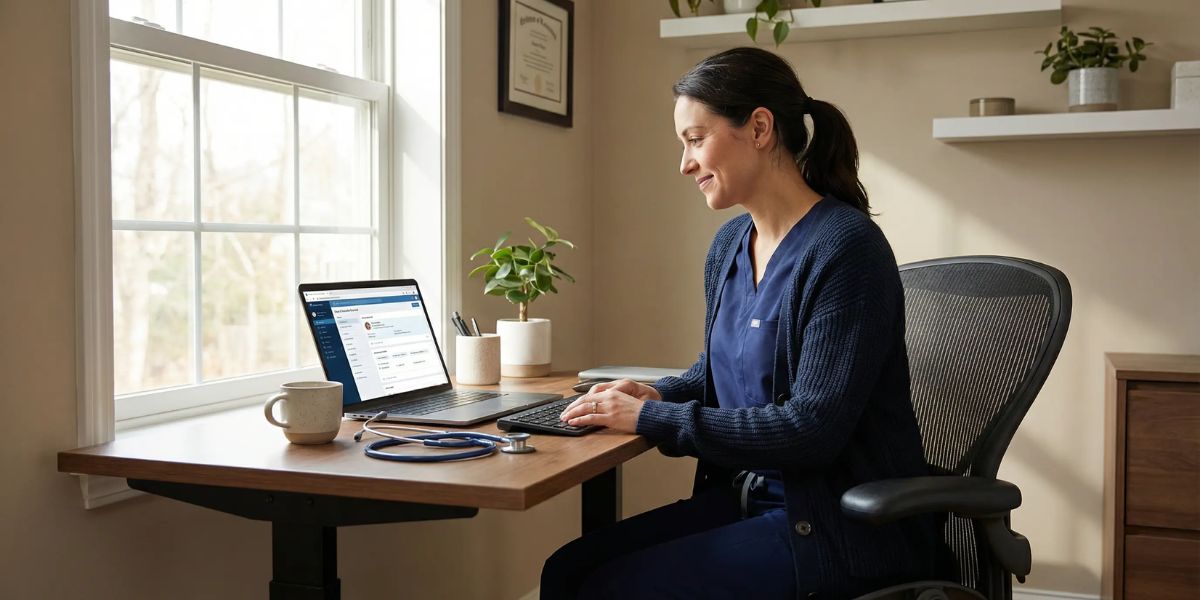
Build a Professional Home Office
A dedicated workspace helps improve productivity, focus, and professionalism. Remote nurses should invest in a reliable laptop, high-speed internet connection, quality headset, and secure healthcare software. A quiet and organized home office also supports better patient communication and efficient daily workflow.ty and professionalism.
Future of Fully Remote Nursing
The future of fully remote nursing looks extremely promising as healthcare organizations continue investing in digital healthcare technologies, telemedicine platforms, and virtual patient care solutions. Remote nursing is expected to become an even more important part of modern healthcare, creating new opportunities for nurses around the world.
Increased Telemedicine Adoption
Healthcare providers continue expanding virtual care services to improve patient access and reduce healthcare costs. Telemedicine is becoming a standard part of healthcare delivery, allowing nurses to provide consultations, education, and support remotely. As patient demand for convenient healthcare grows, telehealth nursing opportunities are expected to increase significantly.
Growth of Artificial Intelligence
Artificial intelligence is transforming healthcare by helping nurses work more efficiently. AI-powered tools will support nurses by:
- Analyzing patient data
- Automating administrative tasks
- Improving care coordination
- Identifying potential health risks
These technologies can reduce workloads and allow nurses to focus more on patient care and communication.
Expansion of Remote Patient Monitoring
Wearable devices and connected healthcare systems are making it easier to monitor patient health from home. Remote patient monitoring programs will continue to expand, creating additional opportunities for nurses to track patient conditions, manage chronic diseases, and provide early intervention when necessary.
More Specialized Remote Roles
Healthcare innovation will continue generating new remote nursing specialties in areas such as telehealth, nursing informatics, virtual care management, digital health coaching, and remote patient monitoring. Nurses who develop technology skills and stay updated with healthcare trends will be well-positioned for these emerging opportunities.enerating new remote nursing specialties.
Human Connection Still Matters
Even in fully remote nursing roles, nursing remains a people-centered profession built on trust, compassion, and meaningful communication. While technology allows nurses to provide care from a distance, patients still need the emotional support and personal connection that only healthcare professionals can provide.
Patients often face fear, uncertainty, and stress when dealing with health concerns. During virtual consultations, nurses play a vital role in offering reassurance, answering questions, and helping patients feel understood. Clear communication becomes especially important because nurses must build trust without being physically present.
Compassion remains one of the most valuable qualities in remote nursing. A caring tone of voice, active listening, and genuine concern for a patient’s well-being can make a significant difference in the healthcare experience. Patients are more likely to follow treatment plans and engage in their care when they feel respected and supported.e with empathy and strong interpersonal skills.
Must Read:
- Best Companies Hiring Remote Nurses
- Remote Nursing Interview Questions and Answers
- How To Start a Virtual Nurse Coaching Business?
Final Thoughts:
So, can nurses work fully remote in 2026? The answer is yes. Advances in telemedicine, healthcare technology, and virtual patient care have made fully remote nursing careers more accessible than ever before.
Roles such as telehealth nurse, nurse case manager, utilization review nurse, remote patient monitoring nurse, health coach, and nursing informatics specialist demonstrate that many nursing responsibilities can now be performed entirely online.
While not every nursing specialty can transition to remote work, opportunities continue to expand as healthcare organizations invest in digital healthcare solutions. Nurses who develop strong communication skills, technology expertise, and clinical knowledge will be well-positioned to succeed in this rapidly growing field.