

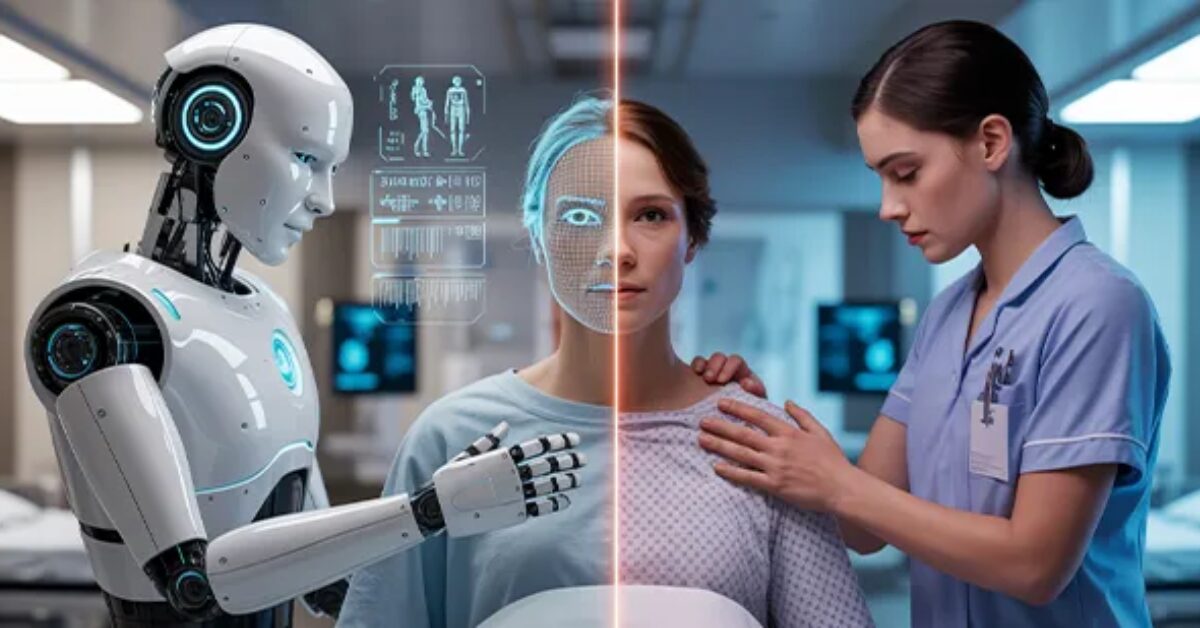
Artificial intelligence (AI) is transforming healthcare faster than ever before. AI-powered diagnostic tools, virtual health assistants, predictive analytics, robotic systems, and automated documentation are changing how hospitals and clinics operate. These technologies promise greater efficiency, faster decision-making, and improved patient outcomes.
However, one important question continues to spark debate among healthcare professionals and patients alike: Do patients prefer AI or human nurses?
While AI has proven valuable in supporting healthcare delivery, nursing is a profession built on human connection, clinical judgment, empathy, and trust. Patients often appreciate the speed and accuracy of technology, but they also value compassion, reassurance, and personalized care that only human nurses can provide.
This article explores the strengths and limitations of AI vs human nurses compares their roles, examines patient preferences, and explains why the future of healthcare will likely depend on collaboration rather than competition.
In This Article
Understanding AI in Modern Nursing
Artificial intelligence refers to computer systems that can analyze data, recognize patterns, make predictions, and assist with decision-making. In healthcare, AI is designed to support—not replace—clinical professionals.
Common Uses of AI in Nursing
AI is increasingly used in healthcare for a variety of tasks, including:
- Predicting patient deterioration
- Monitoring vital signs
- Assisting with clinical documentation
- Managing electronic health records
- Supporting medication safety
- Scheduling appointments
- Remote patient monitoring
- Virtual nursing assistants
- Clinical decision support
- Healthcare data analysis
These tools reduce administrative work and help nurses spend more time on direct patient care.
The Role of Human Nurses
Human nurses remain the foundation of healthcare. They do much more than administer medications or record vital signs. Nurses assess patients, interpret symptoms, educate families, coordinate care, advocate for patients, and provide emotional support throughout the healthcare journey.
Core Responsibilities of Human Nurses
Human nurses are responsible for:
- Assessing patient conditions
- Developing individualized care plans
- Administering medications safely
- Monitoring patient progress
- Responding to emergencies
- Educating patients and families
- Providing emotional support
- Coordinating multidisciplinary care
- Protecting patient safety
- Advocating for patient rights
These responsibilities require both scientific knowledge and interpersonal skills.
Why AI Is Becoming More Popular in Healthcare
Healthcare organizations are investing heavily in AI because it improves efficiency and helps manage growing patient populations.
Faster Data Processing
AI can analyze thousands of patient records within seconds. It identifies patterns that may take humans much longer to detect.
For example, AI systems can recognize early signs of sepsis, monitor abnormal heart rhythms, or predict hospital readmissions based on patient data.
Reduced Administrative Burden
Documentation is one of the most time-consuming aspects of nursing.
AI-powered documentation tools help by:
- Recording clinical notes
- Summarizing patient visits
- Updating electronic health records
- Organizing laboratory results
Reducing paperwork allows nurses to spend more time with patients.
Improved Accuracy
AI reduces many repetitive human errors by checking medication interactions, identifying abnormal laboratory values, and flagging missing documentation.
These capabilities improve patient safety while supporting clinical decision-making.
Why Patients Continue to Prefer Human Nurses
Although AI improves efficiency, research and patient experiences consistently show that most patients still prefer human nurses for direct care.
Emotional Support Cannot Be Automated
Illness often creates fear, uncertainty, and anxiety.
Patients value nurses who:
- Listen carefully
- Provide reassurance
- Offer encouragement
- Comfort families
- Show compassion
- Build trust
AI can answer questions, but it cannot genuinely understand emotions or provide meaningful comfort.
Healthcare is deeply personal, and emotional support remains one of nursing’s greatest strengths.
Human Nurses Build Trust
Trust develops through conversation, empathy, and consistency.
Patients often share concerns with nurses that they may hesitate to discuss elsewhere.
A nurse can recognize hesitation in a patient’s voice, notice fear in facial expressions, or detect anxiety through body language.
These subtle human interactions cannot be fully replicated by artificial intelligence.
Clinical Judgment Goes Beyond Data
AI analyzes information.
Human nurses interpret context.
For example, an AI system may identify normal vital signs while overlooking subtle behavioral changes.
An experienced nurse may recognize:
- Confusion
- Fatigue
- Facial discomfort
- Skin color changes
- Reduced appetite
- Emotional distress
These observations often lead to earlier intervention.
Clinical judgment combines experience, intuition, communication, and evidence-based practice.
AI vs Human Nurses: Key Differences
Patient Interaction
AI provides consistent digital assistance and automated communication.
Human nurses provide personalized conversations, emotional support, and compassionate care.
Patients generally prefer interacting with real people during stressful situations.
Decision-Making
AI analyzes large amounts of clinical data rapidly.
Human nurses combine assessment findings, patient history, family concerns, and professional experience when making decisions.
Together, they create better outcomes than either could alone.
Communication Skills
Effective communication involves much more than exchanging information.
Human nurses:
- Explain diagnoses
- Clarify treatment plans
- Answer questions
- Comfort families
- Adapt communication styles
AI can provide standardized responses but struggles with complex emotional conversations.
Adaptability
Healthcare situations change rapidly.
Human nurses adjust priorities based on:
- Patient behavior
- Unexpected complications
- Family dynamics
- Environmental factors
AI follows programmed algorithms.
Nurses respond creatively to unpredictable circumstances.
Where AI Performs Better
Although patients often prefer human interaction, AI excels in several important areas.
Predictive Analytics
AI identifies patients at risk of:
- Sepsis
- Falls
- Hospital readmission
- Pressure injuries
- Clinical deterioration
Early identification improves patient outcomes.
Continuous Monitoring
AI-powered monitoring systems observe patients 24 hours a day.
They immediately notify nurses about:
- Heart rhythm abnormalities
- Oxygen level changes
- Blood pressure fluctuations
- Respiratory distress
This supports faster intervention.
Documentation Efficiency
Administrative work contributes significantly to nurse burnout.
AI can automate:
- Clinical note generation
- Data entry
- Documentation summaries
- Coding assistance
This allows nurses to spend more time at the bedside.
Where Human Nurses Perform Better
Despite technological advances, human nurses remain irreplaceable in several areas.
Compassionate Care
Patients remember kindness.
Simple actions such as holding a patient’s hand, offering reassurance, or listening without interruption have profound effects on recovery.
AI cannot replace genuine compassion.
Ethical Decision-Making
Healthcare often involves difficult ethical situations.
Nurses help patients navigate decisions involving:
- End-of-life care
- Cultural beliefs
- Family disagreements
- Treatment preferences
These conversations require empathy, respect, and ethical reasoning.
Patient Advocacy
Nurses advocate for patient rights and safety.
They speak up when:
- A treatment seems inappropriate
- A patient has unanswered concerns
- Additional services are needed
Advocacy depends on human judgment and moral responsibility.
What Research Suggests About Patient Preferences
Studies consistently show that patients appreciate technology when it improves efficiency but generally prefer human nurses for direct care.
Patients value AI for:
- Faster appointments
- Accurate monitoring
- Reduced waiting times
- Better access to information
However, they prefer human nurses for:
- Emotional support
- Communication
- Education
- Comfort
- Trust
- Complex care decisions
Most patients do not want AI replacing nurses.
Instead, they prefer technology that supports nurses.
AI and Human Nurses Working Together
The future of nursing is not AI versus humans.
It is AI working alongside human nurses.
A Collaborative Model
In this model:
AI handles repetitive administrative work.
Human nurses focus on:
- Patient interaction
- Clinical assessment
- Emotional care
- Education
- Critical thinking
- Complex decision-making
This partnership improves efficiency while preserving compassionate care.
Benefits of Combining AI and Human Nursing
Healthcare organizations benefit when technology supports rather than replaces nursing practice.
Advantages include:
- Reduced documentation burden
- Earlier detection of complications
- Improved patient safety
- Better workflow efficiency
- Higher patient satisfaction
- Lower burnout among nurses
- More time for direct patient care
Technology strengthens nursing when implemented thoughtfully.
Challenges of AI in Nursing
Although artificial intelligence offers many benefits, it also presents several challenges that healthcare organizations must address. AI is a powerful tool for improving efficiency and supporting clinical decision-making, but it cannot replace the knowledge, experience, and judgment of skilled nurses. Ensuring that AI is used responsibly is essential for maintaining high-quality patient care.
Privacy Concerns
AI systems process and store large amounts of sensitive patient information, including medical histories, test results, and personal health records. Healthcare organizations must implement strong cybersecurity measures, data encryption, and strict access controls to protect this information from cyberattacks and unauthorized access. Maintaining patient privacy is essential for building trust and complying with healthcare regulations.
Algorithm Bias
Artificial intelligence learns from historical healthcare data. If that data contains bias or is not representative of diverse patient populations, AI may produce inaccurate or unfair recommendations. This can contribute to healthcare disparities and unequal treatment. Human oversight is essential to review AI-generated suggestions and ensure decisions are fair, accurate, and patient-centered.
Overreliance on Technology
Healthcare professionals should avoid relying entirely on AI recommendations. While AI can analyze data quickly and identify potential risks, it cannot understand every patient’s unique circumstances or emotional needs. Clinical judgment, critical thinking, and professional experience must remain at the center of patient care. AI should support healthcare decisions, not replace the expertise and compassion of human nurses.
How Nurses Are Adapting to AI
Modern nurses are embracing technology while preserving compassionate care.
Today’s nurses are learning:
- Healthcare informatics
- AI-assisted documentation
- Remote monitoring systems
- Telehealth communication
- Digital literacy
- Data interpretation
These skills prepare nurses for an increasingly digital healthcare environment.
The Future of AI in Nursing
Artificial intelligence will continue expanding in healthcare over the coming years.
Future innovations may include:
- Smarter virtual nursing assistants
- Advanced predictive analytics
- Voice-recognition documentation
- AI-assisted medication management
- Personalized treatment recommendations
- Robotic support for routine tasks
Even as technology advances, patients will continue needing empathy, reassurance, advocacy, and human understanding.
These qualities remain uniquely human.
Must Read:
- Highest Paying Nursing Jobs in 2026
- Nurse Salary by State 2026: Complete Breakdown
- Best States for Nurses to Live and Work in 2026
Conclusion:
The debate between AI vs human nurses is not about choosing one over the other. Both bring valuable strengths to modern healthcare.
AI excels at processing data, improving efficiency, identifying risks, and reducing administrative workloads. Human nurses provide compassion, critical thinking, ethical judgment, communication, and personalized care that technology cannot replicate.
Patient preferences clearly show that while people appreciate the speed and accuracy of AI, they continue to value the empathy and trust offered by human nurses. During moments of illness, uncertainty, and recovery, patients want someone who can listen, understand, and provide genuine emotional support.
The future of healthcare lies in collaboration. AI should empower nurses by handling routine tasks and providing decision support, allowing them to focus on what matters most: delivering safe, compassionate, and patient-centered care.
As healthcare technology continues to evolve, human nurses will remain at the heart of the patient experience, ensuring that innovation enhances, rather than replaces, the human connection that defines exceptional nursing care.