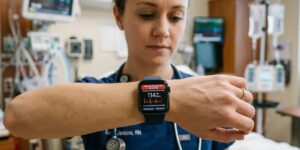


A nurse’s work bag is more than just a place to carry personal belongings. It can serve as a practical toolkit for long shifts, clinical rotations, commuting, and everyday work needs. While the exact contents vary depending on the nurse’s specialty, workplace, shift length, and personal preferences, most nurses benefit from carrying a carefully organized selection of essentials.
A well-prepared nursing work bag can make a busy shift more convenient. Having frequently used personal and professional items within easy reach can save time and reduce unnecessary stress.
What Nurses Carry in Their Work Bag can vary depending on their specialty, workplace, shift length, and personal preferences. A nurse’s work bag is more than just a place for personal belongings. It can hold practical essentials that make long shifts, clinical rotations, commuting, and everyday work routines easier.
From stethoscopes and pens to water bottles, snacks, chargers, and personal hygiene products, here’s a detailed look at what nurses commonly carry in their work bags.
In This Article
Nursing Essentials Every Nurse May Carry
The contents of a nursing bag can differ significantly from one person to another. A hospital nurse may carry different items than a home health nurse, nursing student, or outpatient nurse.
Still, several essentials are commonly useful.
These may include:
- Stethoscope
- Pens
- Permanent marker
- Penlight
- Small notebook
- Watch
- ID badge
- Water bottle
- Snacks
- Phone
- Charger
- Hand sanitizer
- Personal hygiene items
- Extra hair ties
- Lip balm
- Small personal-care pouch
Some workplaces provide many clinical supplies, so nurses may not need to carry them from home.
Always follow workplace policies regarding what personal equipment can be brought into clinical areas.
Stethoscope
For many nurses, a stethoscope is one of the most recognizable items in the work bag.
A stethoscope may be used for patient assessments, listening to heart and lung sounds, checking blood pressure manually, and other clinical tasks.
Because stethoscopes can be expensive, storing one carefully is important.
Avoid throwing it loosely into a bag filled with heavy objects that could bend or damage its components.
Some nurses use a dedicated compartment or protective case.
It’s also helpful to make your stethoscope easy to identify because similar models can easily get mixed up in busy clinical environments.
Pens
Pens are one of the simplest and most useful items in a nurse’s bag.
Many nurses carry several because pens can disappear surprisingly quickly during a busy shift.
Keep a few reliable pens in an easily accessible pocket.
Depending on workplace requirements, nurses may prefer different ink colors for specific documentation or organizational purposes.
However, always follow your facility’s documentation policies rather than assuming a particular color is required.
Permanent Marker
A permanent marker can be useful for certain approved labeling tasks, depending on the workplace.
It’s a small item that takes up very little space.
If you carry one, choose a compact design and store it securely so it doesn’t accidentally mark clothing, equipment, or the inside of your bag.
Penlight
A penlight is another common item for nurses who use it during appropriate assessments.
It can be particularly useful when checking pupil responses or performing other assessment-related tasks.
Some nurses prefer traditional penlights, while others use models designed with additional features.
Before carrying one, make sure you understand how and when it should be used in your clinical setting.
Small Notebook
A small notebook can be useful for writing down reminders, learning points, tasks, or non-confidential information.
Nursing students may find notebooks especially helpful during clinical rotations.
However, privacy is extremely important.
Never write identifiable patient information in a personal notebook unless your organization specifically permits it under appropriate privacy and security policies.
A notebook should support organization without becoming a source of confidential information.
Watch
A reliable watch can be useful in nursing because timing is important for many aspects of patient care.
Some nurses prefer watches with easy-to-clean surfaces or designs that can tolerate frequent hand hygiene.
Depending on workplace rules, a watch can also be useful for checking pulse rates and other timed assessments.
Smartwatches may provide additional features, but nurses should consider workplace policies regarding personal electronics, patient privacy, and infection prevention.
ID Badge
An ID badge is an essential workplace item for many nurses.
It may provide access to certain areas, identify the nurse to patients and colleagues, or function as part of a workplace security system.
Keep it somewhere easy to find.
Many nurses wear their badge rather than keeping it inside their bag, but having a secure place for it when off duty can prevent it from getting lost.
Water Bottle
Hydration can be challenging during long nursing shifts.
A reusable water bottle can encourage nurses to keep water available when workplace rules and workflow permit.
When choosing one, look for practical features such as:
- Leak-resistant lid
- Comfortable handle
- Easy cleaning
- Appropriate capacity
- Durable construction
- Convenient drinking opening
Avoid choosing an unnecessarily large bottle simply because it holds more water.
A very large bottle can become heavy and difficult to carry.
Snacks
Long shifts don’t always go according to schedule.
A practical snack can be useful when a meal break gets delayed.
Depending on personal preferences and workplace rules, nurses might carry:
- Granola bars
- Nuts
- Crackers
- Dried fruit
- Protein snacks
- Fresh fruit
- Other convenient foods
Choose snacks that travel well and don’t create a mess inside the bag.
If you carry food regularly, use a separate container or pouch to keep it away from other belongings.
Lunch Container
Nurses working longer shifts may carry a packed meal.
A good lunch container should fit comfortably inside the work bag or be easy to carry separately.
Look for leak-resistant containers and designs that are easy to clean.
If your workplace has a shared refrigerator, label food appropriately according to facility policies.
Phone
A smartphone can be useful for communication, scheduling, transportation, and personal emergencies.
However, nurses should follow workplace policies regarding personal phone use in patient-care areas.
Personal devices should never be used in ways that compromise patient privacy.
If you use your phone for approved professional purposes, make sure you’re using appropriate and authorized resources.
Phone Charger
A phone that runs out of battery during a long shift can be inconvenient.
A compact charging cable or charger can be useful.
Some nurses also carry a small power bank, particularly when they commute long distances or work extended shifts.
Keep electronic accessories together in a small pouch to prevent tangled cables.
Hand Sanitizer
Hand hygiene is essential in healthcare environments.
Depending on the workplace, hand sanitizer may already be widely available.
Some nurses still prefer carrying a small personal bottle for situations where it is appropriate and permitted.
However, personal sanitizer should not replace proper handwashing when handwashing is required.
Always follow workplace infection-control procedures.
Disinfecting Wipes
Disinfecting wipes can be useful for cleaning certain personal items when appropriate.
However, don’t assume that any household cleaning wipe is safe for medical equipment.
Different materials can be damaged by inappropriate cleaning products.
For stethoscopes, watches, phones, and other equipment, follow the manufacturer’s cleaning instructions and workplace policies.
Lip Balm
Long shifts, dry environments, air conditioning, and frequent handwashing can make personal comfort more difficult.
Lip balm is a small item that can easily fit inside a personal-care pouch.
Choose a container that closes securely to prevent leaks inside the bag.
Hand Lotion
Frequent hand hygiene can contribute to dry hands for some people.
A small bottle of hand lotion can be convenient.
If you’re working in a patient-care environment, consider workplace policies and product restrictions before using scented or other personal-care products around patients.
Hair Ties
Nurses with longer hair may find extra hair ties useful.
They take up very little space and can be helpful if one breaks or disappears during a shift.
Some nurses also carry clips or other hair accessories depending on their workplace requirements.
Personal Hygiene Items
A small hygiene pouch can keep personal-care items organized.
Possible contents include:
- Toothbrush
- Toothpaste
- Deodorant
- Facial tissues
- Lip balm
- Hand lotion
- Hair ties
- Feminine hygiene products
- Breath mints
You don’t need to carry every item every day.
Choose what fits your personal routine.
Tissues
A small packet of tissues is inexpensive and easy to carry.
It can be useful for personal needs or unexpected situations during a long workday.
Tissues can also be stored in an external pocket for quick access.
Extra Socks
An extra pair of socks can be surprisingly useful.
Nurses spend many hours standing and walking, and unexpected spills or wet conditions can make a shift uncomfortable.
A lightweight spare pair takes up little space.
For nurses working long shifts, this can be a practical addition to a larger work bag.
Extra Scrub Top
Some nurses choose to carry an extra scrub top, particularly if their work environment involves situations where clothing can become soiled.
An extra uniform layer can be useful during extended shifts.
However, whether you need one depends on your workplace, specialty, commute, and access to lockers or changing areas.
Small Umbrella
For nurses who commute, a compact umbrella can be useful.
It doesn’t belong in every nurse’s daily bag, but it can be helpful during unpredictable weather.
Choose a small design that fits into a dedicated compartment and store it separately if it becomes wet.
Small First-Aid Items
Some nurses carry a few basic personal-care items, but this doesn’t mean they need to create a complete medical kit.
Hospitals and healthcare facilities generally have appropriate clinical supplies available.
A personal bag should primarily contain items you actually need rather than duplicating the entire supply room.
Personal Medications
People who take regularly scheduled personal medications may need to carry them according to their healthcare provider’s instructions and applicable workplace or travel requirements.
Keep medications in their original labeled containers when appropriate and store them safely.
Don’t leave medications loose in your bag where they could become lost, contaminated, or accidentally accessed by someone else.
Wallet and Keys
Basic personal belongings such as a wallet, keys, transit card, or identification can be kept in a secure compartment.
A bag with a dedicated valuables pocket can make it easier to locate these items.
Avoid carrying unnecessary valuables to work.
The fewer valuable items you bring into a busy workplace, the fewer things you have to worry about losing.
Nurse Work Bag Organization
Having the right items is only half the job.
Organization matters just as much.
A cluttered nursing bag can make simple items difficult to find.
Consider dividing your bag into categories.
Clinical Items
Keep your stethoscope, penlight, pens, and notebook together.
Technology
Use a small pouch for:
- Charging cables
- Power bank
- Earbuds
- Other electronic accessories
Food and Hydration
Keep snacks and meals separate from clinical and personal items.
Personal Care
Use another pouch for:
- Lotion
- Lip balm
- Tissues
- Hair ties
- Other hygiene products
This simple system can make your nurse bag organization much easier.
Use Small Pouches
Small pouches are excellent for preventing clutter.
Instead of having dozens of loose objects at the bottom of your backpack, place similar items together.
For example:
Tech pouch: Chargers and cables
Personal pouch: Hygiene items
Clinical pouch: Pens and small approved accessories
Food pouch: Snacks
This approach also makes it easier to transfer items between bags.
Choose the Right Nursing Bag
The best nurse work bag depends on your daily routine.
A backpack can be useful for nurses who commute or carry heavier loads because the weight can be distributed across both shoulders.
A tote may provide quick access and a more traditional professional appearance.
A structured work bag can be useful for nurses who carry a laptop or tablet.
A smaller bag may be enough for nurses who work in environments where most supplies are provided.
When choosing a bag, consider:
- Capacity
- Number of compartments
- Material
- Comfort
- Weight
- Easy cleaning
- Water resistance
- Zipper quality
- Laptop protection
- Carrying options
Don’t automatically choose the largest bag.
A larger bag can encourage you to carry unnecessary items.
What Nursing Students Carry
Nursing students may have somewhat different bag requirements.
A student might carry:
- Stethoscope
- Penlight
- Pens
- Notebook
- Nursing school paperwork
- Textbooks or study materials
- Tablet or laptop
- Charger
- Water bottle
- Snacks
- Personal hygiene products
- Clinical supplies required by the program
Students often carry more than working nurses because they may need educational materials in addition to clinical equipment.
A well-designed nursing student backpack can make commuting between campus and clinical sites much easier.
What ER Nurses May Carry
Emergency nurses work in fast-paced environments where many supplies are already available within the department.
Their personal bags may therefore focus more on comfort and convenience.
An ER nurse might carry:
- Stethoscope
- Pens
- Watch
- Badge
- Water bottle
- Snacks
- Phone
- Charger
- Personal hygiene items
- Extra socks or clothing
The exact contents depend on the nurse and workplace.
What Home Health Nurses May Carry
Home health nursing can involve more transportation between locations.
These nurses may need to think carefully about portability and organization.
Depending on their employer and role, they may carry work-related supplies, documentation tools, technology, personal protective equipment, and personal items.
Because requirements vary significantly, home health nurses should follow employer policies about what equipment and supplies should be transported between patient locations.
What ICU Nurses May Carry
ICU nurses may spend most of their shift near assigned patients and may not need to transport a large number of personal items.
Their bags often focus on essentials such as:
- Stethoscope
- Pens
- Badge
- Watch
- Water bottle
- Snacks
- Personal items
- Phone and charger
Specialty-specific clinical supplies are generally provided by the facility.
Keep Patient Information Out of Your Personal Bag
One of the most important nurse bag rules involves privacy.
A personal work bag should not become a storage place for confidential patient information.
Avoid carrying:
- Patient-identifying notes
- Unsecured medical records
- Photos of patients
- Confidential documents
- Screenshots containing protected information
Follow your employer’s privacy and information-security policies.
If you need to carry work documents, use the approved process provided by your organization.
Don’t Overpack Your Nurse Bag
It’s tempting to prepare for every possible situation.
But carrying too much can make your bag heavy.
Ask yourself:
Did I use this item recently?
Is it actually required?
Is it already available at work?
Would I miss it if I removed it?
If the answer is no, it may not need to stay in your bag.
A lighter bag is often easier to carry throughout a long workday.
Clean Your Nursing Bag Regularly
Your nurse work bag travels between home, transportation, and the workplace.
It can collect dirt, dust, food crumbs, and other debris.
Create a simple cleaning routine.
Empty the bag completely.
Throw away old receipts and food packaging.
Remove unnecessary items.
Clean the interior and exterior according to the manufacturer’s instructions.
Pay attention to frequently touched areas such as handles and zippers.
If the bag is machine washable, follow the manufacturer’s care instructions rather than assuming it can safely go into a washing machine.
Check Expiration Dates
If you carry personal products such as snacks, medications, or certain hygiene items, periodically check their condition and expiration dates.
Don’t allow old food or damaged products to remain in your bag.
A monthly bag cleanout can be an easy way to catch these issues.
Keep Your Electronics Protected
If you carry a laptop, tablet, phone, or other electronics, use appropriate protective compartments.
Avoid placing heavy objects directly on top of delicate devices.
Keep liquids in tightly sealed containers and preferably separate them from electronics.
This is especially important if your nurse bag contains a water bottle.
Create a Pre-Shift Checklist
A short checklist can prevent forgotten essentials.
Before leaving home, quickly check:
Clinical
- Stethoscope
- Pens
- Badge
- Watch
- Penlight
Personal
- Water
- Snacks
- Wallet
- Keys
- Hygiene items
Technology
- Phone
- Charger
- Power bank if needed
You can customize the checklist based on your workplace.
What Nurses Don’t Need to Carry
A good nurse bag isn’t defined by how much it contains.
Nurses generally don’t need to carry an entire collection of clinical equipment from home when those supplies are available at their workplace.
Avoid unnecessary duplicates.
You also don’t need to carry large quantities of medications, medical supplies, or equipment unless your role and employer specifically require it.
Keeping the bag simple makes it easier to organize and maintain.
Must Read:
- Nursing School Hacks Every Student Needs
- Day in the Life of an ER Nurse in 2026
- TikTok Nursing Trends That Are Actually Helpful
Final Thoughts:
Knowing what nurses carry in their work bag can help both new nurses and nursing students prepare for busy shifts.
The essentials usually focus on practical needs: a stethoscope, pens, badge, watch, water bottle, snacks, phone, charger, and a few personal-care items.
The exact contents should depend on your specialty, workplace, commute, and personal routine.
Organization is just as important as what you carry. Small pouches, dedicated compartments, and a regular cleaning routine can prevent your bag from becoming cluttered.
Most importantly, don’t feel pressured to fill your bag with every nursing gadget or accessory you see online. A practical nurse work bag should make your day easier, not add unnecessary weight.
The best approach is simple: carry what you actually use, organize it well, protect confidential information, and regularly remove anything you no longer need.