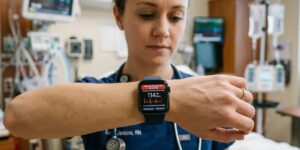


A stethoscope is one of the first essential clinical tools most nursing students purchase. From practicing manual blood pressure measurements to listening to heart, lung, and bowel sounds, students use their stethoscope throughout skills labs and clinical rotations.
The best stethoscope for a nursing student does not necessarily have to be the most expensive model. A good student stethoscope should offer clear sound transmission, comfortable earpieces, durable construction, a practical chestpiece, and a design that is easy to use during routine patient assessments.
For most nursing students, a reliable general-purpose stethoscope is enough. More advanced cardiology or digital models can be useful later if a student’s career moves toward critical care, emergency nursing, cardiology, or other high-acuity specialties.
Before purchasing one, always check your nursing school’s equipment requirements. Some programs specify the type of stethoscope students should use during clinical training.
In This Article
What Makes a Good Stethoscope for Nursing Students?
Choosing a nursing student stethoscope can be confusing because there are dozens of models at different prices. The most expensive option isn’t automatically the right choice.
A good stethoscope should provide a balance of performance, comfort, durability, and value.
Clear Acoustic Performance
Sound quality is one of the most important features. Nursing students need to learn how to recognize normal and abnormal heart, lung, and bowel sounds.
A stethoscope with clear acoustics makes it easier to practice auscultation and build confidence during clinical assessments.
Comfortable Earpieces
Students may wear their stethoscope for several hours during clinical rotations. Comfortable, properly fitting earpieces can reduce discomfort and help create a better seal for listening.
Look for soft eartips and an adjustable headset that fits comfortably without excessive pressure.
Durable Construction
Nursing school can be hard on equipment. Stethoscopes are carried in backpacks, placed around the neck, used in simulation labs, and cleaned frequently.
Durable tubing and a well-built chestpiece can help the stethoscope last through nursing school and potentially into your professional career.
Lightweight Design
A heavy stethoscope can become uncomfortable during long clinical days. If you expect to wear your stethoscope around your neck for hours, weight is worth considering.
Versatile Chestpiece
A versatile chestpiece is useful because nursing students may encounter adult, pediatric, and different clinical assessment situations during training.
Easy Maintenance
Choose a stethoscope that can be cleaned according to the manufacturer’s instructions and whose replacement parts are readily available.
Best Stethoscopes for Nursing Students
There are several strong choices for students, ranging from affordable basic models to premium professional instruments.
3M Littmann Classic III
Best Overall for Nursing Students
The Littmann Classic III is one of the most popular choices for nursing students because it provides a strong balance between acoustic performance, versatility, comfort, and durability.
Its dual-sided chestpiece and tunable diaphragm design make it suitable for routine assessments. Students can use it for learning blood pressure measurement, listening to lung sounds, assessing heart sounds, and performing other basic clinical examinations.
The Classic III is also a stethoscope that can continue to be useful after graduation. Instead of buying a basic model for school and upgrading immediately after becoming an RN, students can invest in one versatile stethoscope from the beginning.
Key features:
- Dual-sided chestpiece
- Tunable diaphragm technology
- Adult and pediatric versatility
- Comfortable eartips
- Durable tubing
- Professional design
- Multiple color options
Best for: Nursing students who want a reliable stethoscope for school and future clinical practice.
MDF Acoustica
Best Budget-Friendly Choice
The MDF Acoustica is an appealing option for students who want a practical stethoscope without spending heavily.
Nursing school already comes with significant expenses, including tuition, textbooks, uniforms, shoes, clinical supplies, and equipment. A budget-friendly stethoscope can therefore make sense for students who need to control their spending.
The Acoustica is designed for general clinical use and provides features suitable for basic nursing assessments.
Key features:
- Lightweight construction
- Dual-head design
- Comfortable eartips
- Affordable price
- Multiple colors
- General clinical functionality
Best for: Students who want an affordable stethoscope for skills labs and clinical rotations.
ADC Adscope
Best Value Alternative
ADC offers several stethoscope models that provide a middle ground between basic student instruments and premium options.
The Adscope line is worth considering for students who want solid construction and useful clinical features without automatically choosing the most expensive model.
Its design can work well for routine patient assessments and nursing school clinical practice.
Key features:
- Durable chestpiece
- Comfortable headset
- Good everyday performance
- Multiple configurations
- Professional appearance
Best for: Students looking for a value-focused alternative to premium stethoscopes.
Littmann Lightweight II S.E.
Best Lightweight Option
Students who prioritize low weight may want to consider the Littmann Lightweight II S.E.
A lightweight stethoscope can be particularly useful during long clinical shifts when students spend hours walking between patient rooms, standing at bedside, and carrying additional equipment.
It is designed primarily for basic adult assessments and routine clinical tasks.
Best for:
- Nursing students
- New healthcare professionals
- Basic assessments
- Students who dislike heavier stethoscopes
The main tradeoff is that students looking for more versatility or advanced acoustic performance may prefer the Classic III.
MDF MD One
Best Mid-Range Alternative
The MDF MD One is another option for students who want a durable, professional-looking stethoscope.
Its dual-head design provides versatility for different types of assessments, while its sturdy construction makes it suitable for frequent use.
The MD One can be particularly appealing to students who want something more substantial than an entry-level stethoscope without moving directly into premium cardiology models.
Best for: Nursing students seeking a durable mid-range stethoscope.
Littmann Cardiology IV
Best Premium Option
The Littmann Cardiology IV is designed for more advanced clinical listening and is generally more than most nursing students need for basic nursing school requirements.
However, students who already have a strong interest in ICU nursing, emergency nursing, cardiology, or other high-acuity specialties may consider it as a long-term investment.
Its advanced acoustic performance can be valuable in situations where subtle heart and lung sounds need to be assessed carefully.
Best for: Students planning toward high-acuity specialties.
Potential drawback: Higher price and greater weight compared with basic student models.
Best Stethoscope for Nursing Students on a Budget
Budget is an important consideration for nursing students.
You don’t need to spend hundreds of dollars to begin learning basic patient assessment skills. Several affordable stethoscopes can be suitable for skills labs and clinical training.
When shopping on a budget, prioritize:
- Clear acoustic performance
- Comfortable eartips
- Durable tubing
- Reliable chestpiece
- Appropriate warranty
- Replacement parts
Avoid choosing a stethoscope solely because it is the cheapest option available. Extremely inexpensive models may not provide the clarity, comfort, or durability needed for repeated clinical use.
A reputable budget or mid-range model can provide much better long-term value.
Best Stethoscope for Nursing School and Clinicals
For students who want one stethoscope that can handle both classroom training and clinical rotations, a versatile general-purpose model is usually the best choice.
The Littmann Classic III is particularly appealing because it can be used throughout nursing school and continue into professional practice.
Students who want to spend less can consider the MDF Acoustica or an ADC model.
The most important thing is to select a stethoscope that allows you to hear clearly and practice your assessment skills confidently.
Do Nursing Students Need an Expensive Stethoscope?
No.
A premium stethoscope isn’t a requirement for becoming a good nurse. Clinical knowledge, assessment technique, communication, critical thinking, and hands-on practice are much more important.
An expensive stethoscope can provide additional features or improved acoustic performance, but students should consider whether those benefits justify the extra cost.
For most students, a quality mid-range stethoscope is more than adequate.
If your budget is limited, spend your money carefully rather than feeling pressured to purchase the most expensive model.
Stethoscope Features Nursing Students Should Prioritize
When comparing stethoscopes for nursing school, it’s easy to become distracted by brand names, colors, and marketing claims. Instead, students should focus on practical features that directly affect comfort, usability, and clinical performance. A well-chosen stethoscope should be reliable enough for skills labs and clinical rotations while fitting comfortably within a student’s budget.
Acoustic Quality
Clear acoustic performance is one of the most important features to consider. Nursing students need to hear common heart, lung, and bowel sounds while practicing patient assessments. A stethoscope with good sound transmission can make it easier to develop auscultation skills and distinguish between normal and potentially abnormal findings.
Comfort
Students may wear their stethoscope for several hours during clinical rotations. Soft eartips, an adjustable headset, and comfortable tubing can reduce discomfort during repeated assessments. The earpieces should fit securely without creating excessive pressure, allowing students to concentrate on patient care rather than adjusting their equipment.
Weight
A lightweight stethoscope can be particularly useful for nursing students who spend long periods walking or standing. Carrying a heavy stethoscope around your neck for an entire clinical shift can become uncomfortable. Consider the weight of the model along with other equipment you will carry throughout the day.
Durability
Nursing students frequently move their equipment between classrooms, skills labs, clinical facilities, and home. Look for quality tubing, a sturdy chestpiece, and reliable construction that can withstand regular handling. A durable stethoscope may provide better long-term value and potentially remain useful after graduation.
Versatility
A general-purpose stethoscope should be suitable for common nursing assessments, including blood pressure measurements, heart sounds, lung sounds, and bowel sounds. Students who may encounter patients of different ages should consider a versatile model that can support both adult and pediatric assessments when appropriate.
Cleaning
Healthcare equipment requires regular cleaning. Choose a stethoscope that can be maintained using the manufacturer’s recommended cleaning methods. Avoid products or cleaning techniques that could damage the tubing, diaphragm, or other components.
Warranty
A good warranty can provide additional peace of mind, particularly when investing in a higher-priced stethoscope. Before purchasing, review the warranty period and understand what types of defects or repairs are covered.
Stethoscope Comparison for Nursing Students
| Stethoscope | Best For | Main Advantage |
|---|---|---|
| Littmann Classic III | Most nursing students | Best overall balance |
| MDF Acoustica | Budget-conscious students | Affordable and practical |
| ADC Adscope | Value seekers | Good balance of price and performance |
| Littmann Lightweight II S.E. | Students who prefer lighter equipment | Lightweight design |
| MDF MD One | Mid-range buyers | Durable construction |
| Littmann Cardiology IV | Advanced specialty interests | Premium acoustic performance |
How to Choose the Right Stethoscope
Selecting the right stethoscope starts with understanding your personal needs.
Consider Your Nursing Program
Before purchasing anything, check your nursing school’s equipment list.
Some programs may have specific requirements for the type of chestpiece, accessories, or stethoscope design students should use.
Consider Your Budget
Set a realistic budget based on your overall education expenses.
If you’re already purchasing uniforms, nursing shoes, textbooks, and other supplies, you may not need to spend a large amount on a stethoscope.
Consider Your Career Goals
If you’re interested in general nursing, a versatile student stethoscope is usually enough.
If you’re already planning a career in ICU, emergency care, or cardiology, you may eventually want to upgrade to a more advanced model.
Consider Comfort
A stethoscope that sounds excellent but feels uncomfortable can become frustrating during long clinical days.
Pay attention to:
- Weight
- Eartip softness
- Headset tension
- Tubing flexibility
- Chestpiece size
Consider Durability
Nursing students use their equipment frequently. A durable stethoscope can be a better investment than replacing a cheap model every year.
How to Use a Stethoscope Properly
Buying a quality stethoscope is only the first step toward becoming confident with patient assessment. Nursing students need to develop proper auscultation techniques through regular practice. Learning how to position the stethoscope, use the chestpiece correctly, and recognize normal sounds can make clinical assessments more accurate and help build confidence during nursing school.
Position the Earpieces Correctly
Proper earpiece positioning is essential for hearing sounds clearly. The earpieces should fit comfortably inside the ears and create an appropriate seal to reduce outside noise. Most stethoscope earpieces are angled slightly forward, so make sure they are positioned correctly rather than simply placing them into the ears without checking their orientation.
A comfortable fit also helps prevent discomfort during extended clinical practice.
Use the Correct Chestpiece
Before using your stethoscope in clinical practice, take time to understand how its chestpiece works. Some models have dual-sided chestpieces, while others use tunable diaphragms.
Learn which side is active and how to switch between different functions if your model requires it. Understanding your equipment beforehand allows you to focus more on patient assessment rather than figuring out the device during a clinical encounter.
Practice in Quiet Environments
Learning auscultation in a quiet skills laboratory can make the process much easier. Background noise can interfere with subtle heart, lung, and bowel sounds, particularly when students are still developing their listening skills.
Use simulation labs and practice sessions to become comfortable with positioning the chestpiece and identifying common sounds before performing assessments in busy clinical environments.
Learn Normal Sounds First
Understanding normal findings provides an important foundation for recognizing potential abnormalities. Students should practice identifying normal heart sounds, breath sounds, and bowel sounds before attempting to interpret unusual findings.
Remember that recognizing an abnormal sound is only one part of assessment. Students should follow their instructors’ guidance and learn how findings should be documented, reported, and evaluated within the broader clinical picture.
Practice Blood Pressure Measurements
Manual blood pressure measurement is one of the most common skills nursing students practice with a stethoscope. Proper technique involves positioning the patient correctly, selecting an appropriately sized blood pressure cuff, placing the stethoscope correctly, and listening carefully for the relevant sounds.
Regular practice can improve accuracy and confidence. Students should practice under the supervision of qualified instructors and follow the procedures taught by their nursing program.
Follow Your Instructor’s Guidance
Your clinical instructor can help you improve positioning, technique, and sound identification.
How to Care for Your Nursing Student Stethoscope
A good stethoscope can last throughout nursing school and potentially many years into your professional career when it is handled and maintained properly. Nursing students frequently carry their stethoscopes between classrooms, simulation labs, clinical placements, and home, so proper care is essential. Simple maintenance habits can protect the tubing, chestpiece, and other components while keeping the stethoscope comfortable and reliable.
Clean It Regularly
Stethoscopes come into contact with patients and clinical environments, making regular cleaning an important part of equipment care. Follow the manufacturer’s cleaning instructions and use only products recommended for your particular model. Avoid harsh chemicals or cleaning methods that could damage the tubing, diaphragm, or other components. Regular cleaning also helps maintain a professional and hygienic appearance.
Store It Carefully
When you’re not using your stethoscope, store it somewhere safe rather than leaving it loose under heavy books or equipment. If you carry it in a nursing backpack, make sure it isn’t compressed beneath laptops, textbooks, or other heavy items. A dedicated compartment or protective case can help prevent unnecessary damage.
Avoid Extreme Heat
Excessive heat can affect the materials used in stethoscope tubing and other components. Avoid leaving your stethoscope in direct sunlight, near heating equipment, or inside a hot vehicle for extended periods. Keeping it in a moderate-temperature environment can help preserve the tubing and maintain its flexibility.
Don’t Pull It Aggressively
Avoid stretching, twisting, or repeatedly bending the tubing. Pulling the stethoscope aggressively when removing it from your neck or backpack can place unnecessary stress on the components. Handle it gently and allow the tubing to maintain its natural shape whenever possible.
Keep It Identifiable
Stethoscopes can easily get mixed up in busy nursing schools, simulation labs, and clinical environments. Adding your name or another discreet identifier can make your equipment easier to recognize. Options include an engraved name tag, identification label, or distinctive accessory. Avoid adding anything that interferes with cleaning or normal use.
Consider adding:
- Name tags
- Engraving
- Identification labels
- Distinctive accessories
This makes it easier to recognize your equipment.
Common Mistakes When Buying a Nursing Student Stethoscope
Choosing a stethoscope is an important decision for nursing students, especially because it will be used regularly during skills labs and clinical rotations. With so many brands, features, and price ranges available, it’s easy to focus on the wrong things. Avoiding common purchasing mistakes can help students find a reliable stethoscope that fits their needs, budget, and nursing education.
Choosing the Most Expensive Model
A premium stethoscope may offer advanced acoustic performance and additional features, but the most expensive option isn’t automatically the best choice for every student. Most nursing students primarily need a reliable instrument for routine assessments, blood pressure measurements, and learning basic heart and lung sounds. Consider your actual requirements before spending more.
Buying the Cheapest Model
Saving money is important for students, but choosing an extremely inexpensive stethoscope can sometimes result in poor sound quality, uncomfortable eartips, weak tubing, or limited durability. A low-cost model may need to be replaced sooner, potentially making it less economical over time. Look for a reputable manufacturer and reasonable balance between price and quality.
Ignoring Your School’s Requirements
Before purchasing a stethoscope, check your nursing program’s equipment list. Some schools may recommend or require specific features, chestpiece designs, or other specifications. Buying a model that doesn’t meet those requirements can create unnecessary expenses.
Choosing Based Only on Appearance
Stethoscope colors and designs can be fun, but appearance shouldn’t be the deciding factor. Prioritize acoustic performance, comfort, durability, and usability. A visually attractive stethoscope won’t be helpful if it is uncomfortable or difficult to use.
Forgetting About Weight
Nursing students may carry their stethoscope throughout long clinical shifts. A heavy model can become uncomfortable around the neck, especially when combined with other equipment. Consider lightweight designs if you’ll be wearing it for several hours.
Ignoring Warranty Information
A warranty can provide valuable protection, particularly when purchasing a more expensive stethoscope. Check the manufacturer’s warranty terms and understand what is covered before making your purchase.
Buying Without Learning the Basics
Even the best stethoscope cannot replace proper clinical training. Students should learn correct auscultation techniques, understand normal sounds, and practice regularly. Your equipment should support your skills, not become a substitute for developing them.
Should Nursing Students Buy a Digital Stethoscope?
Digital stethoscopes are becoming more advanced and can provide features such as amplification, recording, noise reduction, and connectivity.
However, most nursing students don’t need a digital stethoscope for basic nursing school training.
Traditional acoustic stethoscopes are generally simpler, don’t require batteries, and are easier to use for routine assessments.
A digital model may make sense for students with specific hearing needs or those interested in advanced healthcare technology, but it shouldn’t be considered an essential nursing school purchase.
Should Nursing Students Buy a Pediatric Stethoscope?
Most students should start with a versatile adult/general-purpose stethoscope unless their program specifically requires a pediatric model.
A dedicated pediatric stethoscope can be useful for students pursuing pediatric nursing, neonatal care, or related specialties.
For general nursing education, however, a versatile dual-sided stethoscope provides broader usefulness.
How Long Should a Nursing Student Stethoscope Last?
A high-quality stethoscope can potentially remain useful for many years when it is properly maintained.
Its lifespan depends on:
- Frequency of use
- Cleaning practices
- Storage
- Tubing condition
- Handling
- Replacement of worn components
Students who purchase a durable model can potentially continue using it after graduation.
This is one reason a slightly higher initial investment can sometimes provide better long-term value.
What is the best stethoscope for nursing students?
The Littmann Classic III is a strong overall choice for most nursing students because it offers a useful combination of acoustic performance, versatility, comfort, and durability. Students with smaller budgets can consider models from MDF or ADC.
Do nursing students need a Littmann?
No. Littmann is a popular choice, but it isn’t mandatory. A good-quality stethoscope from another reputable manufacturer can also work well for nursing school.
What is the best cheap stethoscope for nursing students?
The MDF Acoustica is a practical budget-friendly option. Other affordable models from established medical-equipment brands may also be suitable, depending on your school’s requirements and your clinical needs.
Is the Littmann Classic III good for nursing school?
Yes. Its versatile design makes it suitable for common nursing assessments and clinical training. It can also remain useful after graduation, making it a popular long-term choice.
Do nursing students need a cardiology stethoscope?
Usually not. Most nursing students can learn basic assessment skills with a good general-purpose stethoscope. A cardiology model may make more sense for students specifically planning to enter high-acuity specialties.
How much should a nursing student spend on a stethoscope?
There is no fixed amount. A practical budget can range from an affordable student model to a mid-range professional stethoscope. Choose based on your school’s requirements, budget, comfort, and expected clinical use.
What color stethoscope is best for nursing students?
Color is primarily a personal preference. Popular choices include black, navy, blue, purple, and other professional shades. Choosing a distinctive color can also make your stethoscope easier to identify in a busy clinical environment.
Must Read:
- Most Relatable Nursing Memes of 2026
- Best Scrubs for Nurses in 2026
- Best Compression Socks for Nurses
Final Thoughts:
The best stethoscope for nursing students should provide reliable sound quality, comfortable eartips, durable construction, and enough versatility for everyday clinical assessments. You don’t need the most expensive model to become a successful nurse.
For most students, the Littmann Classic III is an excellent all-around choice. It offers the versatility needed during nursing school while remaining useful after graduation.
Students on a tighter budget can look at options such as the MDF Acoustica, while those seeking a value-focused alternative can consider an ADC Adscope. The Littmann Lightweight II S.E. is worth considering for students who prioritize a lighter design, while the Littmann Cardiology IV is better suited to students with specific interests in advanced or high-acuity specialties.
The most important investment isn’t the brand printed on the stethoscope. It’s the time you spend learning how to use it correctly.
Practice regularly, learn normal heart and lung sounds, listen carefully, follow your instructors’ guidance, and develop strong clinical assessment skills. A good stethoscope can support your education, but your knowledge, observation, critical thinking, and patient-care skills will ultimately define you as a nurse.